
AC Repair Troubleshooting: Safe Preliminary Steps and Professional Evaluation Criteria
Use these home maintenance tips and troubleshooting steps to safely triage an AC breakdown. Decide with confidence when to call a pro on this.
Our Location
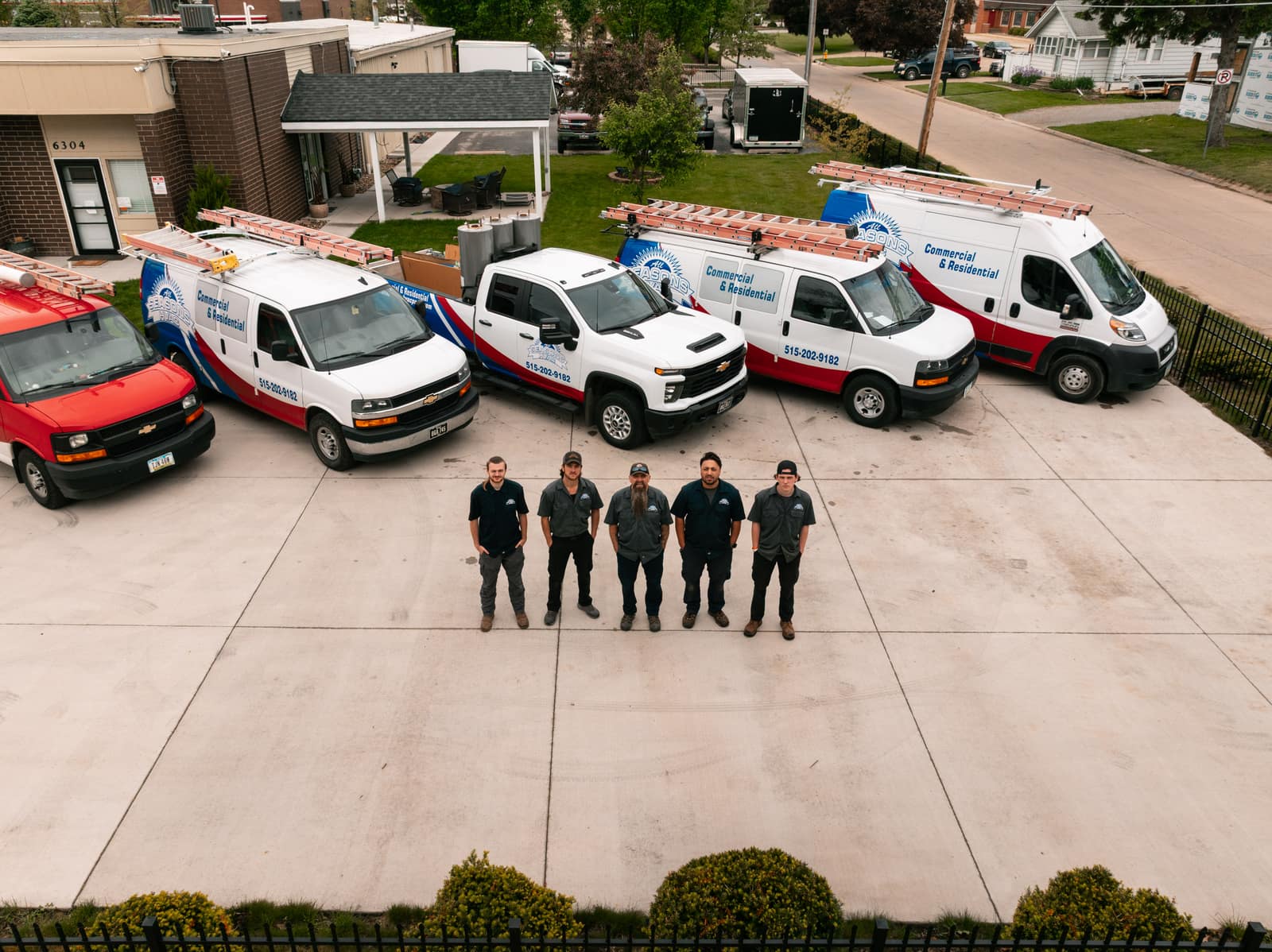
6304 SW 7th St, Des Moines, IA 50315
Office Hours
Mon-Fri: 7am - 5pm

Use these home maintenance tips and troubleshooting steps to safely triage an AC breakdown. Decide with confidence when to call a pro on this.
Surviving the Summer Heat: Triage Your AC System Safely
When the mid-July peak summer heat sets in and your air conditioner suddenly stops blowing cold air, having a reliable set of home maintenance tips and troubleshooting strategies is your first line of defense. Peak summer temperatures exceeding 90 degrees Fahrenheit cause rapid thermal overload inside your house, making immediate and accurate system triage critical for your family's safety and comfort. An air conditioning failure during extreme weather is highly stressful, often leaving you scrambling to figure out what went wrong while the indoor temperature climbs by the minute.
Before you panic, it helps to understand the concept of system triage. Triage involves distinguishing between simple homeowner checks—like a flipped switch or a dirty filter—and complex mechanical failures that require specialized tools. You do not need to be a mechanical engineer to perform these initial assessments. Instead, you are acting as a first responder for your HVAC system. By safely evaluating the basic external factors that affect cooling performance, you can quickly determine whether you are dealing with a minor user error or a major component failure.
Setting the expectation that preliminary troubleshooting is merely the first step changes how you approach the problem. You are not trying to rebuild the compressor; you are gathering the objective information needed to hire the right professional. When you know exactly how to choose professional services based on concrete symptoms rather than vague guesses, you protect your equipment from further damage and ensure you do not waste time on unnecessary service calls.
Airflow and Thermostat Checks: Safe Homeowner Maintenance
The most common cooling issues originate from the simplest components. Guiding yourself through foundational, safe DIY troubleshooting steps improves system efficiency and rules out basic user errors before you pick up the phone. Following a structured checklist ensures you cover all the bases without putting yourself or your equipment at risk.
- Verify thermostat settings: Start at the control center. Ensure the thermostat is set to "Cooling" mode, not just "Fan" or "Heating." Check the battery health; a blank screen or a flashing low-battery indicator often means the system simply cannot receive the signal to turn on. Drop the target temperature three to five degrees below the current room temperature to force a cooling cycle.
- Inspect and replace dirty air filters: Locate your return air filter and pull it out for a visual inspection. If you cannot see light through the material, it is time for a replacement. According to the U.S. Department of Energy, replacing a dirty, clogged 1-inch or 2-inch pleated filter with a clean one can lower an air conditioner's energy consumption by 5 to 15 percent. This single step is the most critical part of safe preliminary checks for AC repair.
- Check all indoor vents for blockages: Walk through every room and inspect the supply registers and return grilles. Move any furniture, heavy drapes, or thick rugs that might be blocking the airflow. Closing vents in unused rooms actually increases the static pressure inside the ductwork, forcing the blower motor to work harder.
- Clear leaves, dirt, and debris from the outdoor condenser: Head outside and examine the large metal cabinet containing your compressor and condenser coil. The system needs at least two feet of clear space in all directions to exhaust heat effectively. Remove overgrown bushes, fallen branches, and accumulated yard waste from the perimeter.
Even in difficult environments, maintaining proper airflow is non-negotiable. For instance, one local apartment resident on a sixth floor required professional cleaning for two heavily restricted 1.5-ton HVAC units. Even in high-rise or hard-to-reach spaces, polite, professional cleaning is necessary to restore the airflow required for the equipment to function properly.
The Impact of Restricted Airflow
Poor airflow is the leading cause of frozen evaporator coils. When warm indoor air cannot pass over the cold indoor coil fast enough, the condensation on the metal fins drops below the 32-degree Fahrenheit mark and freezes solid. This block of ice insulates the coil, completely halting the cooling process. Left unaddressed, frozen coils lead to automatic system lockouts, severe compressor strain, and eventual premature failure of the entire unit.
Power and Breaker Issues: When to Reset and When to Stop
Air conditioners consume a massive amount of electricity, particularly older 10 to 12 SEER units fighting against 95-degree outdoor temperatures. During peak summer heat, AC units run extended cycles, significantly increasing the likelihood of tripped breakers from minor airflow restrictions or temporary power surges. Addressing electrical troubleshooting requires strict safety boundaries to ensure you do not attempt dangerous electrical repairs.
Locating the electrical panel: Find your home's main electrical panel, usually located in a garage, basement, or utility hallway. Look for the 30-amp to 50-amp double-pole circuit breaker labeled "HVAC," "AC," or "Condenser." If the switch is resting in the middle position—neither fully ON nor fully OFF—it has tripped.
The safe reset procedure: To reset a tripped breaker, firmly push the switch all the way to the OFF position until you feel a click. Wait a full 30 seconds to allow the electrical charge to dissipate, then push it firmly back to the ON position. You should only perform this reset procedure exactly one time.
The danger of repeated resets: If the breaker trips again immediately, or trips a few minutes after the unit starts running, stop touching the panel. Repeated resets indicate a severe electrical short, a grounded compressor, or a failing capacitor. Forcing electricity into a compromised circuit creates a severe fire hazard and guarantees further damage to the HVAC system. At this point, the intervention of a licensed professional is mandatory.
A typical pattern we see is sudden failure during peak demand. For example, one homeowner experienced a complete system halt in their 2018-built house on a hot Saturday morning in August. Because they communicated the exact symptoms after performing safe preliminary checks, a technician was dispatched on short notice to provide a quick, hassle-free fix. Completing these basic checks provides the exact details needed when researching and contacting service providers.
The Boundary: From DIY Triage to Professional Dispatch
The Problem: Many homeowners attempt to push past basic maintenance, opening sealed electrical panels or attaching gauges to refrigerant lines in an effort to save on a service call.
The Cause: The abundance of online video tutorials creates a false sense of security, leading well-meaning individuals to believe that complex mechanical repairs are safe weekend projects. However, modern air conditioning systems utilize high-voltage electricity and pressurized chemical refrigerants, such as R-410A or the newer R-32, that require specialized training to handle.
The Solution: Clearly delineate the legal and safety boundaries between homeowner maintenance and licensed professional work. Any task that requires opening a sealed electrical compartment, measuring high-voltage components, or handling refrigerant legally requires Environmental Protection Agency (EPA) certification and specialized licensing. Attempting unauthorized DIY repairs on these internal components not only puts your physical safety at risk but also immediately voids the manufacturer's warranty on your equipment.
| Task Category | Safe DIY Triage | Requires Licensed Professional |
|---|---|---|
| Airflow Management | Replacing filters, clearing vents | Cleaning sealed evaporator coils |
| Electrical Systems | Resetting a breaker ONCE | Testing capacitors, replacing wiring |
| Refrigerant Levels | Checking for ice on outside lines | Gauging pressure, adding Freon |
| Thermostat Operation | Replacing batteries, adjusting temp | Rewiring control boards |
Once you hit the boundary of safe triage, it is time to transition your mindset from troubleshooting mode into evaluation mode. Your goal is no longer to fix the machine yourself, but to select a qualified contractor who can diagnose the failure accurately.

Objective Criteria for Evaluating AC Repair Companies
Knowing how to choose professional services means relying on industry-standard criteria to confidently evaluate and hire a repair firm without wasting resources. When preliminary checks fail, honest diagnostics and reliable repairs become the gold standard for evaluation.
- Mandatory transparency: Look for companies that mandate a thorough, transparent diagnostic process before prescribing repairs. A reputable technician will never guess at a problem from the driveway; they will systematically test the equipment and show you the results.
- Root cause analysis: Evaluate the provider's willingness to explain the root cause of the failure rather than just the symptom. If the system is low on refrigerant, the objective is to find and fix the leak, not just refill the tank and leave.
- Avoid immediate replacement pressure: Beware of contractors who push immediate, full-system replacements without objective diagnostic proof. While an older 15-year-old system might eventually need replacing, that decision should be based on concrete data (like a failed compressor or a major structural leak), not a high-pressure sales tactic.
- Verify credentials: Always check for proper state licensing, active insurance policies, and a track record of transparent communication.
Finding a company that values this level of detail is crucial. One local customer recently required general AC system maintenance for their 4-ton unit and noted that the technician arrived in a timely manner, delivering honest, informative, and knowledgeable service rather than a rushed sales pitch. That is the standard you should expect.
What a Professional Diagnostic Should Include
A true professional diagnostic relies on measurable data. The technician should perform refrigerant level verification using digital manifold gauges to ensure the system is operating at the manufacturer's specified pressures, often measuring subcooling within 1 to 2 degrees. They will conduct electrical component testing, checking the microfarad readings on 35/5 or 45/5 dual run capacitors and inspecting contactors for pitting or burn marks. Finally, they will perform a compressor amp draw measurement to ensure the heart of the system is not pulling excessive electricity, which indicates internal mechanical wear.
Preparing for Your Professional AC Diagnostic Visit
Once you have selected a reputable repair company, organizing your triage findings helps communicate effectively with the chosen professional. Technicians are excellent at solving mechanical puzzles, but they rely on your firsthand account of the symptoms to point them in the right direction.
Document all preliminary steps taken: Write down exactly what you did before calling. Telling the technician, "I changed the filter yesterday, and I reset the breaker exactly once, but it tripped again immediately," saves them 30 minutes of baseline testing. It directs their attention straight to the electrical system.
Note unusual behaviors: Think back to the days leading up to the failure. Did you notice any unusual sounds, like grinding, squealing, or rattling? Were there strange smells, such as burning plastic or a sweet chemical odor? Did you observe short-cycling behaviors, where the system turned on and off every five minutes? These clues are invaluable for diagnosing intermittent issues.
Clear physical access: Expedite the technician's work by clearing the physical path to your equipment. Move boxes away from the indoor air handler in the garage or attic, and ensure the gate to the backyard is unlocked so they can access the outdoor condenser unit. Providing a clean, accessible workspace allows the technician to focus entirely on diagnosing your air conditioner safely and efficiently.
Frequently Asked Questions About AC Troubleshooting
Why is my AC running but not cooling?
This usually indicates an airflow restriction, dirty coils, or a potential refrigerant leak. When the system runs without producing cold air, the indoor evaporator coil cannot absorb heat effectively. Start by checking your air filter and ensuring all vents are open. If airflow is normal, a professional will need to check the refrigerant charge and inspect the compressor.
How do I safely reset my air conditioner?
To safely reset your unit, turn off the system at the thermostat first. Next, locate your electrical panel, find the HVAC circuit breaker, and push it completely to the OFF position. Wait 30 minutes to allow the internal pressure to equalize, then flip the breaker back ON and restore power at the thermostat. Never reset the breaker more than once.
What AC maintenance can I do myself safely?
Safe homeowner maintenance focuses entirely on airflow and external cleanliness. You can safely change your standard MERV 8 indoor air filters every 30 to 90 days, clear outdoor debris away from the condenser cabinet, and keep all indoor supply and return vents unblocked. Leave all electrical testing and internal component cleaning to licensed professionals.
When should I call an AC repair professional?
You should call a professional when basic troubleshooting steps fail to restore cooling, or if you encounter obvious warning signs of mechanical failure. If your breaker trips repeatedly, you hear grinding or screeching noises, or you notice ice forming on the refrigerant lines, turn the system off immediately and dispatch a qualified technician.
How do I evaluate an AC repair company?
Evaluate repair companies by looking for transparent diagnostic processes, clear communication, and proper industry licensing. A trustworthy company will test the components, explain the root cause of the failure using objective data, and present repair options without resorting to high-pressure sales tactics for immediate system replacements.
Next Steps for Restoring Your Home's Comfort With Home Maintenance Tips and Troubleshooting
Navigating an air conditioning failure during a late August heatwave does not have to be a chaotic experience. By relying on structured home maintenance tips and troubleshooting, you can safely triage the system, protect the equipment from further damage, and set the stage for professional intervention. Understanding the boundary between safe DIY checks and complex mechanical repairs empowers you to act decisively.
Furthermore, knowing the objective criteria for a professional diagnostic ensures you are never left in the dark during a service visit. You now know exactly what to look for—transparent testing, root cause explanations, and measurable data. If your system is still struggling after you have completed the safe preliminary checks, it is time to encourage a deeper look. Seek out a reputable local expert for an honest evaluation to restore your home's comfort quickly and safely.
Special Offers
Current promotions & savings
Honest value on the heating and cooling your home depends on — just mention an offer when you reach out, and our team will take care of the rest.
10% OFF
Senior Citizen
*Cannot be combined with other offers or discounts. *Cannot be applied to prior services.
Claim Offer10% OFF
Military & First Responders
*Cannot be combined with other offers or discounts. *Cannot be applied to prior services.
Claim OfferAsk About Savings
First-Time Customer
*Cannot be combined with other offers or discounts. *Cannot be applied to prior services.
Claim OfferRelated Articles

Article
Heating Options Comparisons for Homeowners: Gas Furnaces vs. Cold-Climate Heat Pumps
Is It Time to Upgrade? Evaluating Heating Replacements This Fall Are you wondering if your aging furnace will survive another unpredictable winter, or is it…
Read More
Article
Why Is My AC Blowing Warm Air? Fall Transition & Furnace Startup Troubleshooting
Transitioning Your HVAC System: Navigating the Shift from Cooling to Heating At All Seasons HVAC, we frequently hear from Des Moines homeowners wondering why…
Read More
Article
Why Is My AC Blowing Warm Air? Fall HVAC Transitions and Furnace Startup Troubleshooting
Facing Strange HVAC Behaviors as Autumn Arrives? When seeking local service expertise and area tips for your home's seasonal transitions, the most common…
Read MoreWhat Our Clients Say
Customer Testimonials
Real reviews from homeowners who trust All Seasons HVAC for their comfort
Gregorio Trujillo
May 2026
“Called on a Friday afternoon to get my AC going and install me a new thermostat. Saved my weekend!”
Charla Johnson
April 2026
“Very knowledgeable, friendly and professional young men! Ross and Levi cleaned my 2 HVAC units in my apartment today on the 6th floor of a 12 floor building. Nothing but praise from all of my neighbors. So very very polite in every sense of the word. Thank you guys so very much!”
Bailey Mefford
March 2026
“Amazing service! They were able to come out on super short notice when our brand new house's AC system was not working. My husband contacted them the night before (Friday) and they promised to come out the following morning (Saturday) and absolutely kept that promise!”