Facing a Sudden AC Breakdown? How to Navigate Your Repair Choices
Is your air conditioner actually broken, or is it just struggling to keep up with the afternoon heat? When you are suddenly left without cooling, finding accurate options comparisons for homeowners becomes your top priority. With peak summer heatwaves approaching rapidly, the urgency of a complete AC breakdown often leads to rushed, uneducated decisions. You want your house cool again, and you want it fast. However, homeowners frequently face a tough choice between a quick, temporary patch and a comprehensive, lasting repair. Deciding between two standard service solutions without clear guidance is frustrating and often leads to regret.
Understanding the technical trade-offs before you commit to a service prevents costly secondary failures down the line. An air conditioning system is a complex network of electrical and mechanical components. When one part fails, it often places immense strain on the rest of the system. This guide provides an unbiased comparison framework for evaluating options for local services, helping you strip away the marketing jargon and make the right call for your home’s comfort and your long-term budget.
Common signs you need to evaluate your repair options immediately:
- Warm air blowing from vents: The system is running, but the air feels tepid or humid.
- Short-cycling: The unit turns on and off rapidly without ever reaching the target temperature.
- Unusual noises: Grinding, squealing, or loud banging sounds indicate significant mechanical distress.
- Unresponsive thermostat: The screen is blank, or the system ignores your temperature adjustments.
The Technical Reality: ‘Band-Aid’ Fixes vs. Comprehensive Repairs
To make an informed decision, you must understand the difference between a surface-level fix and a true mechanical repair. A “band-aid” fix addresses the immediate symptom without diagnosing the underlying cause. For example, a technician might swap out a blown dual-run capacitor to get the fan spinning again. While this restores cooling temporarily, failing to test the underlying blower motor’s electrical draw means the new capacitor will likely blow again within weeks. The root cause—a failing motor pulling too much amperage—remains unresolved.
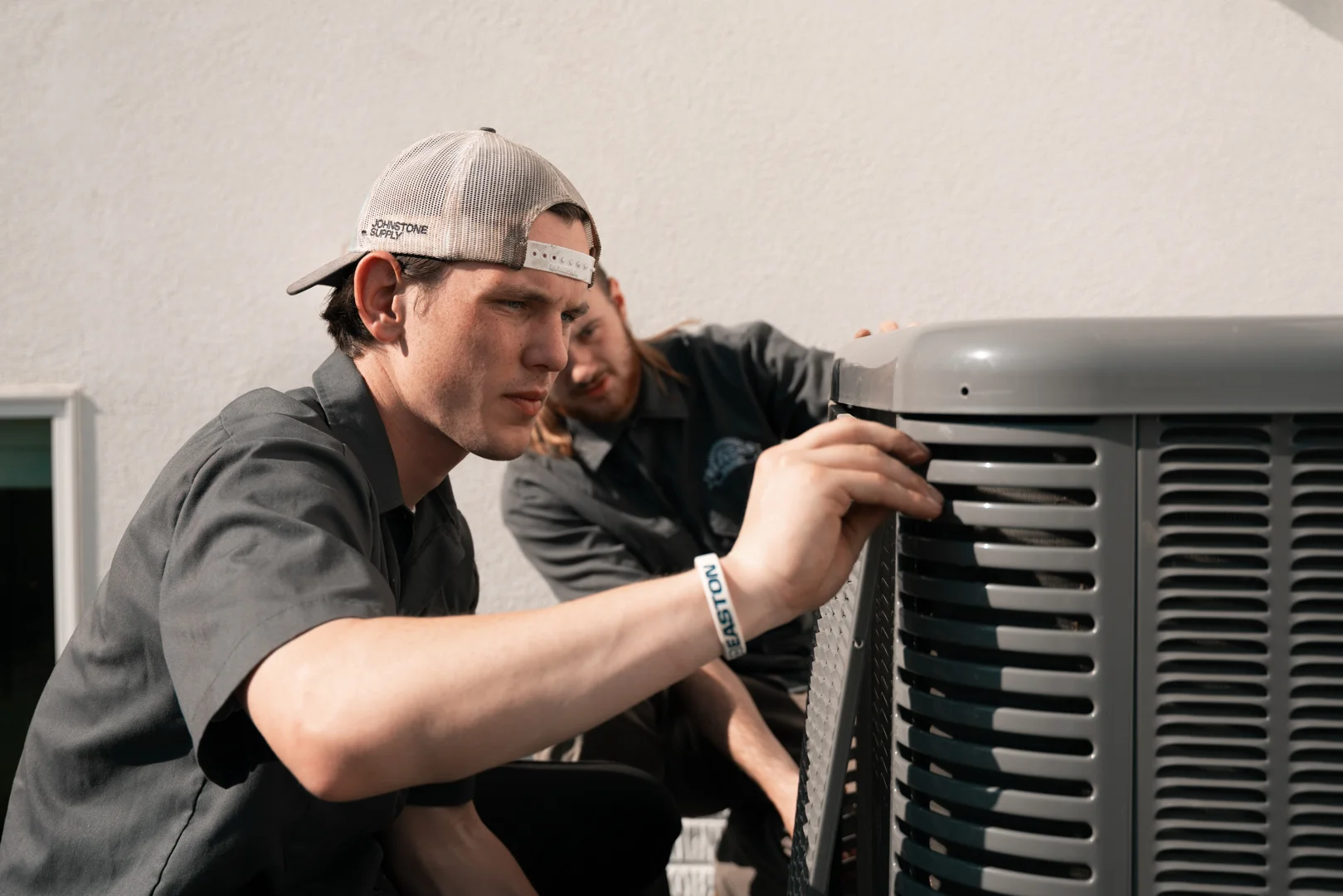
Consider a real-world scenario where an air conditioning system stops working on a sweltering 98-degree summer day. A technician might arrive and apply a temporary fix that gets the cold air blowing again immediately, providing instant relief from the extreme heat. However, to fully solve the problem and prevent another breakdown, they must return to perform a comprehensive repair on the underlying mechanical fault. Evaluating the trade-offs between cost, longevity, and immediate performance is essential in these moments. A comprehensive diagnostic goes beyond the broken part to test refrigerant pressures, measure airflow static pressure, and verify electrical continuity across the entire system.
When a Quick Fix Makes Sense
Not every breakdown requires a massive overhaul. There are specific situations where a faster, more targeted repair is the correct technical choice.
- Minor electrical faults: A loose wire, a tripped breaker, or a blown fuse can often be repaired quickly without indicating a larger systemic failure.
- Isolated component failures: If a contactor fails due to standard wear and tear but the compressor tests perfectly fine, replacing just the contactor is appropriate.
- Waiting for major parts: Sometimes, an immediate temporary relief measure is necessary while waiting for a major replacement part, like a specialized coil or compressor, to arrive from the manufacturer.
When Comprehensive Repair is Non-Negotiable
In many cases, applying a quick patch is technically irresponsible and will only lead to further damage.
- System-wide pressure imbalances: If the unit is freezing up due to low airflow or incorrect refrigerant charge, simply thawing the ice will not stop it from freezing again the next day.
- Refrigerant leaks: Adding refrigerant without locating and sealing the leak is a temporary, environmentally harmful patch. The system must be pressure-tested, sealed, and recharged properly.
- Failing compressors: If the compressor is grounding out or valves are failing, no amount of electrical patching will save the unit. A deep mechanical repair or replacement is required.
The Age Factor: Using the 15-to-20-Year Rule to Guide Your Decision
Age is one of the most objective data points you can use when evaluating options for local services. According to the U.S. Department of Energy and ENERGY STAR, central air conditioners generally last 15 to 20 years if properly maintained throughout their lifespan. Applying this timeline helps dictate exactly when to choose a repair over a full system replacement.
As an air conditioner ages, its components undergo significant thermal and mechanical stress. The compressor valves wear down, the condenser coils suffer from micro-corrosion, and the electrical contacts degrade. When a major component fails on a unit nearing the end of its operational life, you must evaluate the diminishing returns of repairing it. Spending heavily to replace a blower motor on an 18-year-old system often makes little sense when the compressor could easily fail the following month.
Furthermore, older units lose efficiency over time. A system installed 15 years ago operates at a much lower Seasonal Energy Efficiency Ratio (SEER) than modern equipment. Comparing the efficiency loss of older units against the performance of modern systems is a critical part of the decision-making process. The energy savings alone from a newer, high-efficiency unit can often offset the upfront installation costs over time.
| System Age | Typical Repair Viability | Efficiency Status | General Recommendation |
|---|---|---|---|
| 0 to 5 Years | Highly Viable | High (Modern SEER standards) | Repair. Parts are likely under manufacturer warranty. |
| 6 to 10 Years | Usually Viable | Moderate to High | Repair, unless facing a catastrophic compressor failure out of warranty. |
| 11 to 15 Years | Questionable | Declining efficiency | Weigh repair costs carefully. Consider replacement if the repair is extensive. |
| 16+ Years | Rarely Viable | Low (Outdated technology) | Replace. Diminishing returns make large repairs financially unwise. |

How High Humidity Accelerates Wear on Temporary Repairs
Your local climate plays a massive role in how your air conditioner operates and how long repairs actually last. In hot, humid climates, AC units are forced to run much longer cycles to maintain indoor comfort. It is not just about dropping the temperature; it is about removing heavy moisture from the air. This process, known as latent cooling, places continuous, heavy demand on the compressor and the blower motor.
Longer operational cycles mean that temporary fixes on critical components have a significantly shorter lifespan. If a weakened blower motor is given a “band-aid” electrical fix, the extreme heat and constant running will quickly burn out the motor entirely. Extreme heat and high humidity specifically strain capacitors, contactors, and motors, making comprehensive, permanent repairs far more critical locally than in mild climates.
Furthermore, improperly repaired or poorly maintained units fail to adequately dehumidify the home. If a system is short-cycling because of a faulty sensor or an oversized replacement part, it shuts off before it has time to extract moisture from the indoor air. If you are constantly wondering Why Is My AC Not Cooling Properly, the answer often lies in how your equipment handles the local climate load. Poor dehumidification leads to secondary indoor air quality issues, including dampness and musty odors, adding hidden costs and discomfort to what seemed like a “cheap” repair.
A Framework for Objectively Evaluating HVAC Service Quotes
When you receive a quote for an air conditioning repair, it is critical to look beyond the bottom line. You must evaluate what is actually included in the diagnostic and repair process. Stripping away the marketing jargon allows you to compare quotes based on actual technical value rather than flashy promises.
Consider a common winter scenario where the exact source of an HVAC performance issue is unclear. A reliable technician will patiently explain the entire diagnostic process and repair plan, even checking your system’s warranty status before recommending a fix. This ensures the issue is resolved efficiently without you feeling rushed into a major purchase. A commitment to transparent pricing and fast response times serves as the benchmark for evaluating local options. You should always know exactly what you are paying for before any wrenches are turned.
You must also identify hidden fees or inflated emergency rates that mask the true cost of the service. A quote that looks incredibly cheap upfront often lacks a comprehensive diagnostic, meaning the technician is only quoting the symptom, not the cure. Assessing the value of transparent pricing fundamentally alters the return on investment of your repair decision.
Key Questions to Ask Your Technician
Before approving any major repair work, use this checklist to ensure you are getting a comprehensive solution:
- Is this a permanent solution or a temporary patch? Ensure the technician explains whether the proposed fix addresses the root cause of the breakdown.
- How does this repair impact the overall lifespan of the system? Ask if investing in this repair will realistically add years to the unit, or if it is just buying a few months of time.
- Are there any secondary issues contributing to this failure? A blown electrical component is often a symptom of poor airflow, dirty coils, or a struggling motor.
- Is the broken part currently covered under a manufacturer warranty? Always verify warranty status, as this drastically changes the options comparisons for homeowners.
- What exactly is included in the diagnostic fee? Confirm that the technician will test the entire system, not just the single part that failed.
Frequently Asked Questions About Evaluating AC Repairs
Should I repair or replace my aging AC unit?
The short answer is to replace units over 15 years old that require major repairs. According to the Department of Energy, central air conditioners last roughly 15 to 20 years. If your system is within this age range and faces a costly compressor or coil failure, the diminishing returns of a repair make replacement the smarter financial choice. However, if the unit is under 10 years old and well-maintained, repairing it is almost always the best route.
How do I objectively evaluate an AC repair quote?
You evaluate a quote by looking at the scope of work, not just the final price. A trustworthy quote details the diagnostic steps taken, the exact parts being replaced, and whether the fix addresses the root cause or just a symptom. Ask the technician to explain the technical reasoning behind the quote. If a quote seems unusually low, it often indicates a temporary patch rather than a comprehensive, lasting repair.
What should I look for in a local HVAC contractor?
Look for transparent pricing, clear communication, and a thorough diagnostic process. A reliable contractor will patiently explain the issue, check your equipment’s warranty status, and present both short-term and long-term solutions. Avoid technicians who rush you into a decision or refuse to explain the technical mechanics behind the breakdown. Proper licensing and a track record of comprehensive repairs are also essential.
Is it worth fixing an old AC unit if it’s over 15 years old?
Usually, it is not worth investing heavily in a system that old. By the 15-year mark, components have suffered significant thermal and mechanical wear, and the system operates at a much lower efficiency than modern units. While a minor electrical fix might be acceptable to get through the season, spending heavily on a major component like a blower motor or compressor is financially unwise due to the high likelihood of subsequent failures.
How does high humidity affect my air conditioning system’s performance?
High humidity forces your air conditioner to work significantly harder to achieve indoor comfort. The system must run longer cycles to extract heavy moisture from the air, a process known as latent cooling. This constant operation places massive strain on capacitors, motors, and compressors, causing temporary repairs to fail much faster than they would in a dry climate. Proper sizing and comprehensive repairs are vital to handle high humidity loads.
What is the difference between a temporary AC fix and a comprehensive repair?
A temporary fix only addresses the immediate symptom, while a comprehensive repair solves the underlying mechanical fault. For example, replacing a blown fuse restores power, but a comprehensive repair involves testing the system to find out exactly what caused the electrical surge in the first place. Comprehensive repairs prevent recurring breakdowns and protect the long-term health of your HVAC equipment.
Make a Confident Repair Decision for Long-Term Comfort: Options Comparisons for Homeowners
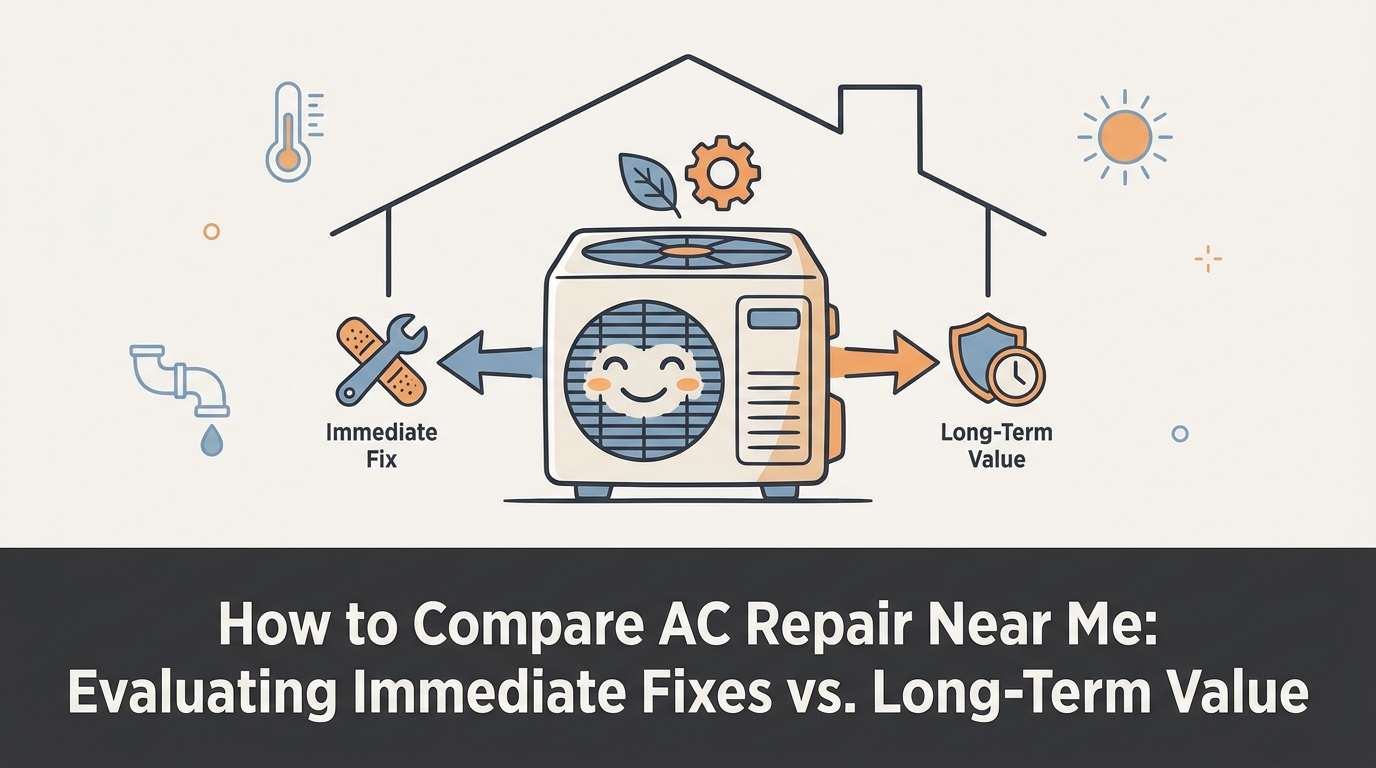
Choosing the right repair option requires weighing immediate needs against long-term system health. When the heat is rising and your system stops blowing cold air, the instinct is to grab the fastest, cheapest fix available. However, relying on an objective evaluation rather than rushed decisions during a breakdown is the only way to protect your home and your wallet from repeated failures.
By understanding the 15-to-20-year age rule, the heavy toll that local humidity takes on temporary patches, and the technical difference between a band-aid and a true fix, you are well-equipped to navigate your choices. Reach out to a local expert for a transparent, thorough diagnostic to restore your home’s comfort. Ultimately, having a clear, unbiased comparison framework that dictates exactly when to choose one option over the other ensures your air conditioning system delivers reliable cooling for years to come.