Why the Best HVAC Setup for Des Moines Metro Weather Is More Demanding Than Most Homeowners Expect
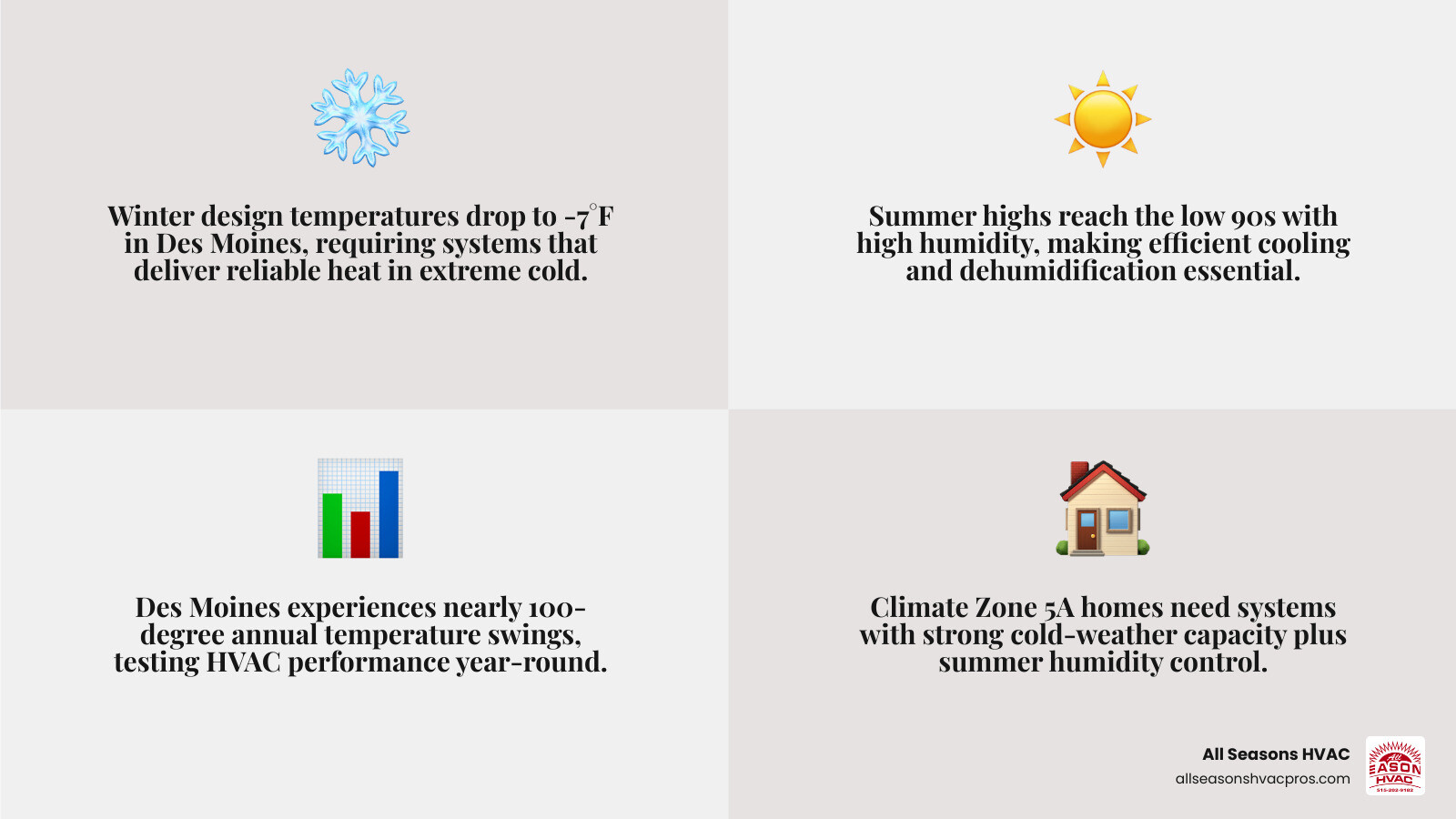
Finding the best HVAC setup for Des Moines metro weather is genuinely harder than it sounds — and that’s not an exaggeration. Des Moines sits in IECC Climate Zone 5A, a classification that signals one of the most demanding heating climates in the country. Winter design temperatures can drop to -7°F. Summers push into the low 90s with high humidity. That’s a nearly 100-degree swing across the year, and your HVAC system has to handle every degree of it reliably.
For a budget-conscious homeowner, that kind of climate pressure means one wrong equipment choice can lead to higher energy bills, frequent breakdowns, or a system that just can’t keep up on the coldest or hottest days.
Here’s a quick look at the best HVAC options for Des Moines homes:
| HVAC System | Best For | Key Strength | Key Limitation |
|---|---|---|---|
| Dual-fuel (heat pump + gas furnace) | Most Des Moines homes | Efficiency + cold-weather power | Higher upfront cost |
| Cold-climate heat pump only | Tight, well-insulated newer homes | Year-round efficiency, one system | May need backup below -10°F |
| Gas furnace + central AC | Older homes, high heat demand | Proven reliability, powerful heat | Less efficient in mild weather |
| Ductless mini-split | Homes without ducts, additions, older neighborhoods | Zoned comfort, no ductwork needed | Not always practical as whole-home solution |
The right answer depends on your home’s age, insulation, existing ductwork, and how much temperature variation your neighborhood sees. What works well in a newer Waukee build may not be the right fit for an older home in Beaverdale or Sherman Hill.
This guide walks you through each option clearly, so you can make a confident, informed decision — whether you’re replacing an aging system or planning a full upgrade.
Understanding the Des Moines Climate Challenge

To truly understand why finding the best HVAC setup for Des Moines metro weather is so critical, we have to look at the unique meteorological challenges of Central Iowa. We don’t just get “cold” winters or “warm” summers; we get the absolute extremes of both.
According to official ASHRAE design conditions, Des Moines has a winter design temperature of -7°F (at 99% design conditions) and a summer design temperature of 89°F to 91°F. This massive 96°F annual temperature range puts extreme stress on heating and cooling equipment.
Furthermore, because we are in Climate Zone 5A (Cool – Humid), we deal with heavy agricultural humidity during the summer months. Average relative humidity levels often hover around 71%. When the air is saturated with moisture, your air conditioner has to work twice as hard to dehumidify your indoor air before it can even begin to lower the temperature. If your system is oversized, it will cool the house too quickly without removing this moisture, leaving you with a cold, clammy, and mold-prone indoor environment.
Wind patterns also play a huge role. Cold northern winds sweeping off Saylorville Lake or across the open fields surrounding Grimes and Johnston can dramatically increase infiltration losses in drafty homes. If you are curious about how these local factors interact with your home’s energy usage, you can read more details in our article on How Des Moines Metro Climate Affects Your HVAC System.
What is the Best HVAC Setup for Des Moines Metro Weather?
When choosing a system, most local homeowners are looking for a setup that delivers consistent comfort, reliability, and lower energy bills. The traditional approach in Central Iowa has always been a standard split system: a gas furnace paired with a central air conditioner. However, as of June 2026, technology has advanced significantly, making modern hybrid and all-electric systems highly viable and extremely popular.
To compare your options, it helps to understand the main efficiency ratings:
- SEER2 (Seasonal Energy Efficiency Ratio 2): Measures cooling efficiency. Modern systems range from the federal minimum of 13.4 up to 26. Higher numbers mean lower summer electricity bills.
- HSPF2 (Heating Seasonal Performance Factor 2): Measures the heating efficiency of heat pumps. A higher HSPF2 rating indicates a more efficient heat pump during the winter months.
- AFUE (Annual Fuel Utilization Efficiency): Measures gas furnace efficiency. A 96% AFUE furnace converts 96 cents of every dollar spent on gas into usable heat for your home.
For many homeowners, the ultimate setup is a hybrid or “dual-fuel” system. This pairs an electric heat pump with a gas furnace. During mild spring and autumn days, the heat pump handles both heating and cooling with incredible efficiency. When the true Iowa winter freezes set in, the system automatically switches over to the gas furnace to provide that rugged, powerful heat.
If you want to dive deeper into how heat pumps perform in our region, check out our comprehensive guide on Everything You Need to Know About Heat Pump Efficiency in the Midwest.
Why Dual-Fuel is the Best HVAC Setup for Des Moines Metro Weather
For the vast majority of homes in the Des Moines metro area—from the historic blocks of Des Moines to the growing developments in Ankeny and Waukee—a dual-fuel system represents the “Goldilocks” solution.
A dual-fuel system utilizes a cold-climate heat pump alongside a high-efficiency gas furnace. Why is this pairing so effective?
- Optimized Efficiency: Heat pumps are incredibly efficient at moving heat rather than creating it. In mild winter temperatures (above 30°F to 35°F), a heat pump can heat your home for a fraction of the cost of burning gas.
- Automatic Switchover: You don’t have to manually toggle your system. Your smart thermostat monitors the outdoor temperature. Once the temperature drops below the “balance point” where the heat pump becomes less efficient, the system automatically switches to the gas furnace.
- Reduced Wear and Tear: By sharing the workload, neither system is overworked, extending the overall lifespan of your equipment.
Transitioning to this setup can significantly lower your heating bills while ensuring you never have to worry about sub-zero nights. Discover more about these advantages in our article on the Top Benefits of Heat Pumps for Central Iowa Homeowners.
Ductless Mini-Splits as the Best HVAC Setup for Des Moines Metro Weather
Not every home in the Des Moines metro has the ductwork required for a traditional central system. Older, historic neighborhoods like Beaverdale, Sherman Hill, and the Greenwood Historic District are famous for their beautiful architecture, but they often rely on boiler systems or radiant heat.
Adding traditional ductwork to these homes can be incredibly invasive and expensive. That is where ductless mini-splits shine as a secret weapon.
Mini-splits offer:
- Zoned Comfort: Each indoor air handler can be controlled independently, allowing you to heat or cool specific rooms rather than the whole house.
- Easy Installation: They only require a small three-inch hole in the wall to connect the indoor unit to the outdoor compressor.
- High Efficiency: Because there are no ducts, you completely eliminate the 20% to 30% energy loss associated with leaky ductwork.
Whether you have a drafty second story, a newly finished sunroom in West Des Moines, or a historic home in Indianola, ductless systems offer targeted comfort without the mess. Learn more about how this technology works by reading Ductless Heating and Cooling: A Des Moines Homeowners Secret Weapon.
Maximizing Efficiency: Thermostats, Insulation, and Ductwork
Even the most advanced, high-efficiency HVAC system will struggle if your home’s envelope is weak. According to the Insulation Institute, about 90% of U.S. residences do not have adequate insulation. While southern climates only require 13 to 14 inches of attic insulation, our northern climate in Iowa requires 16 to 18 inches (R-49 to R-60) to keep heat from escaping during the winter.
Ductwork is another common culprit behind high energy bills. Standard duct systems can easily lose 20% to 30% of their conditioned air through minor leaks, poor connections, and uninsulated runs in crawlspaces or attics. If you find yourself asking why your bills spike during extreme weather, read our breakdown on The Real Reason Your Iowa AC Bill Spikes Every Summer.
To maximize your home’s efficiency and get the most out of your heating and cooling setup, we recommend following these energy-saving best practices:
- Upgrade to a Smart Thermostat: An ENERGY STAR certified smart thermostat can save you an average of $180 per year on heating and cooling costs by automatically adjusting temperatures when you are asleep or away.
- Seal and Insulate Your Attic: Ensure you have at least 16 inches of high-quality attic insulation to prevent thermal bridging.
- Schedule Duct Sealing: Sealing leaky duct joints with mastic or professional foil tape ensures that the air you pay to heat or cool actually reaches your living spaces.
- Maintain Clearance: Keep your outdoor condenser unit clear of weeds, grass, and debris by at least two feet to ensure proper airflow.
- Use Window Coverings: Close your drapes or blinds during hot summer afternoons to block out radiant solar heat, and open them on sunny winter days to help warm your home naturally.
Maintaining Your System for Iowa’s Extreme Seasons
Because our systems run almost continuously during the peak of summer and winter, regular preventative maintenance is non-negotiable. Skipping annual service can reduce your system’s efficiency, void manufacturer warranties, and shorten its overall lifespan by several years.
If your home still uses an older air conditioning unit manufactured before 2010, it likely relies on R-22 refrigerant. Because of the federal R-22 phase-out, sourcing this refrigerant for repairs has become incredibly expensive, often making a system replacement the most practical and financially sound decision.
When planning an upgrade, it is helpful to review a professional Complete HVAC Replacement Guide Des Moines to understand what to expect. Additionally, keep in mind that maintaining a heat pump requires slightly different steps than maintaining a standard central AC unit. You can learn about these distinctions in our article on The Key Differences Between Heat Pump and AC Care.
For homeowners looking to make an upgrade more manageable, exploring flexible payment options is a great step. You can read our Des Moines IA HVAC Financing Guide or check out our direct HVAC Financing Des Moines IA options to find a plan that fits your household budget. Don’t forget to also check our HVAC Promotions Des Moines IA page for current deals and seasonal discounts!
Frequently Asked Questions About Des Moines HVAC Setups
Navigating home comfort decisions can feel overwhelming. Here are answers to some of the most common questions we hear from homeowners across the Des Moines metro area.
What is the most energy-efficient thermostat setting for Des Moines summers and winters?
According to the Department of Energy, the most energy-efficient thermostat setting during the summer is 78°F when you are at home. When you are away from home for more than four hours, turning the temperature 7 to 10 degrees warmer (up to 85°F) can save you between 5% and 15% on your cooling costs.
During the winter, the recommended setting is 68°F while you are awake at home, and lower when you are sleeping or away. Adjusting your thermostat downward when you leave the house helps prevent heat from rapidly escaping through your walls and windows during the coldest parts of the day.
How long do typical HVAC systems last in the Des Moines metro?
On average, the lifespan of HVAC equipment in Central Iowa breaks down as follows:
- Gas Furnaces: 15 to 30 years (highly dependent on regular maintenance and filter changes).
- Central Air Conditioners: 12 to 15 years (extreme summer humidity and rapid temperature swings can accelerate wear on compressors).
- Heat Pumps: 10 to 15 years (since they operate year-round for both heating and cooling, they tend to have a slightly shorter lifespan than heating-only units).
- Ductwork: 20 to 25 years before seals degrade and insulation begins to fail.
Regular professional maintenance can easily extend these lifespans by 3 to 5 years, saving you from premature replacement costs.
Can a heat pump handle the coldest winter days in Iowa?
Yes, modern cold-climate heat pumps are engineered to deliver reliable, efficient heat even when outdoor temperatures drop down to -13°F or lower. They utilize advanced inverter-driven compressors that act like a dimmer switch, ramping up and down smoothly to maintain a steady indoor temperature rather than cycling on and off.
However, because Des Moines winters can occasionally plunge below -15°F, we highly recommend pairing your heat pump with a backup heating source—such as a gas furnace in a dual-fuel setup, or supplemental electric resistance heat. This ensures your home stays perfectly cozy even during the most severe Iowa blizzard.
Conclusion
At All Seasons HVAC LLC, we are dedicated to helping our neighbors throughout Des Moines, Ankeny, Waukee, West Des Moines, Norwalk, Indianola, Grimes, Johnston, and the surrounding Central Iowa communities stay comfortable all year long. Whether you need a quick repair, seasonal maintenance, or a complete system replacement, our experienced team is here to help you design the best HVAC setup for Des Moines metro weather.
We understand that investing in home comfort is a major decision, which is why we offer budget-friendly financing plans to ensure affordable year-round comfort for every family. From expert HVAC Installation Des Moines IA Guide advice to reliable Heating Services Des Moines IA and Air Conditioning Services Des Moines IA, we have you covered.
If you are looking for an Affordable HVAC Des Moines IA option or a highly Reliable HVAC Des Moines IA partner, let us help. We also provide specialized Commercial HVAC Installation Des Moines IA, Commercial HVAC Service Des Moines IA, and Other HVAC Services Des Moines IA for local business owners.
Ready to optimize your home’s comfort and start saving on your energy bills? Visit our main service page at HVAC Des Moines IA or contact us directly at All Seasons HVAC to schedule your professional home comfort consultation today!