What Your AC Circuit Breaker Keeps Tripping and What It Means for Your Home
AC circuit breaker keeps tripping what it means is one of the most common — and most stressful — questions homeowners face on a sweltering Iowa summer day. One moment your home is cool. The next, you’re walking to the electrical panel to flip the switch back on — again.
Here’s the short answer:
Your AC breaker trips when the circuit draws more power than it’s rated to handle. This is a built-in safety response. The breaker shuts off power to prevent overheating, damaged wiring, or an electrical fire.
The most common reasons this happens include:
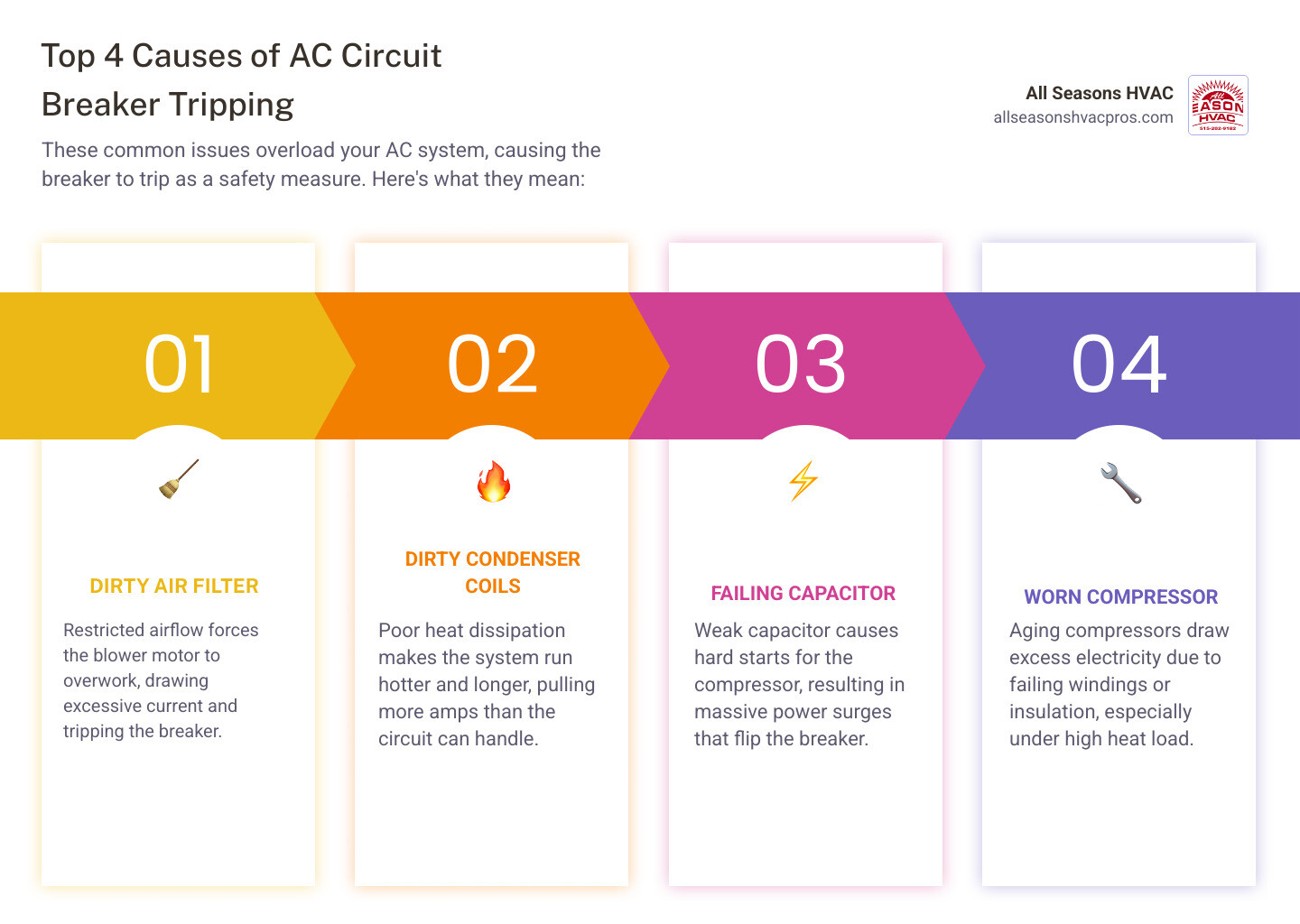
- Dirty air filter — restricted airflow forces the motor to work harder and draw more current
- Dirty condenser coils — trapped heat causes the system to run longer and hotter
- Failing capacitor — the compressor struggles to start and pulls a massive surge of power
- Worn or failing compressor — aging compressors draw excess electricity, especially on hot days
- Loose wiring or a faulty breaker — electrical faults that cause the circuit to trip even when the AC itself is fine
- Short circuit or ground fault — a serious electrical failure inside the unit that needs immediate professional attention
A one-time trip during an extreme heat wave may be nothing to worry about. But if your breaker trips repeatedly, that’s your system telling you something is wrong — and ignoring it can lead to compressor failure, damaged wiring, or worse.
Understanding Why Your AC Circuit Breaker Keeps Tripping and What It Means
Think of your circuit breaker as the “smoke alarm” for your home’s electrical wiring. Its primary job is overcurrent protection. Every breaker in your panel has a specific amperage limit — for example, a 20-amp or 30-amp rating. If your air conditioner tries to pull 40 amps due to a mechanical or electrical struggle, the breaker flips to the “off” position to prevent the wires from melting or catching fire.
When we talk about ac circuit breaker keeps tripping what it means, we are usually looking at an “overload.” This happens when the system encounters resistance and has to work much harder than it was designed to. While the trip is annoying, it is actually doing its job perfectly by protecting your home from an electrical surge or fire. However, if you are experiencing Common Ac Electrical Problems, simply flipping the switch back on won’t fix the underlying issue.
Common Mechanical Causes for System Overload
Believe it or not, many electrical trips start as mechanical problems. When a part of your AC isn’t moving air or heat correctly, the motors have to “muscle” through the resistance, which consumes more electricity. If your unit is struggling to breathe, you might need Ac Repair Des Moines Ia to restore proper airflow before the electrical system sustains permanent damage.
How a Clogged Filter Explains Why Your AC Circuit Breaker Keeps Tripping and What It Means
The most common culprit is often the simplest: a dirty air filter. When dust and pet hair accumulate on the filter, it creates massive airflow restriction. Imagine trying to run a marathon while breathing through a thick pillow — that is exactly what your blower motor feels like.
To compensate for the lack of air, the blower motor runs longer and hotter, eventually drawing enough current to trip the breaker. Furthermore, low airflow causes the evaporator coils to drop below freezing. This can lead to ice buildup, which further strains the system. If you live in a high-traffic area like Central Iowa, we recommend checking your filters every 30 days during the peak of summer 2026. If the problem persists after a filter change, it may be time for Ac Repair West Des Moines Ia.
Dirty Condenser Coils and Outdoor Fan Issues
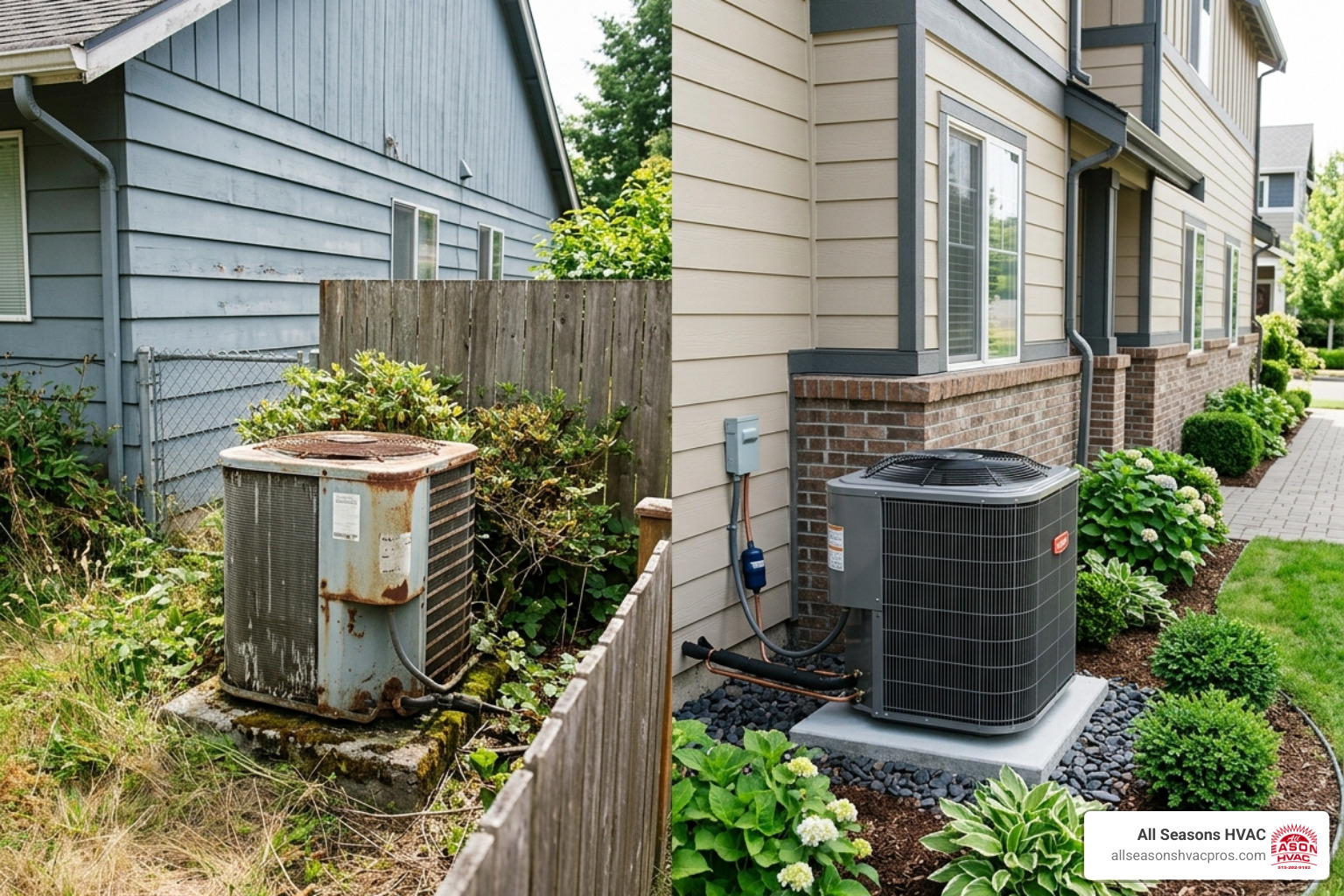
Your outdoor unit (the condenser) is responsible for heat dissipation. It takes the heat from inside your home and releases it into the Iowa air. If the condenser coils are coated in grass clippings, cottonwood seeds, or dirt, they act like an insulator, trapping the heat inside the unit.
Because the heat has nowhere to go, the pressure inside the refrigerant lines skyrockets. High pressure forces the compressor to work in “overdrive,” pulling excessive amperage. Similarly, a failing outdoor fan motor that can’t spin at full speed will cause the same overheating effect. Keeping the area around your outdoor unit clear of debris is a vital step in preventing the need for Ac Repair Ankeny Ia.
Electrical Component Failures and Wear
As AC units age, their internal electrical components begin to degrade. This is especially true for the “start” components that help the heavy-duty compressor get moving. If your system hums loudly before the breaker trips, you are likely dealing with a component failure that requires professional Ac Repair Johnston Ia.
Component Failure: AC Circuit Breaker Keeps Tripping and What It Means for Your Compressor
The compressor is the “heart” of your AC and its most power-hungry part. Over time, the motor windings inside the compressor can experience insulation breakdown. This leads to a “short to ground,” where electricity leaks directly into the metal casing of the unit instead of flowing through the motor. This is a critical failure that will trip the breaker immediately.
Another common issue is “hard starting.” This occurs when the compressor struggles to overcome the initial friction to start spinning, pulling what we call “Locked Rotor Amps” (LRA). A failing capacitor — the small battery-like device that gives the motor a boost — is often the reason for this struggle. If the capacitor is weak, the compressor may pull a massive surge of power that exceeds the breaker’s limit. This is a common reason for Ac Repair Norwalk Ia calls during the first hot week of the year.
Loose Wiring and Faulty Breaker Switches
Iowa’s changing seasons cause materials to expand and contract, and the constant vibration of an AC unit can slowly loosen electrical panel connections. Loose wiring creates high resistance and “arcing,” which generates intense heat. Modern arc-fault breakers are designed to detect this and shut down immediately to prevent a fire.
In some cases, the problem isn’t the AC at all — it’s the breaker itself. Circuit breakers can wear out after years of use or exposure to heat. If the breaker feels hot to the touch or smells like burning plastic, the switch itself may need replacement. For those in the metro area, Ac Repair Urbandale Ia experts can diagnose whether the fault lies in the machine or the panel.
Safe Troubleshooting Steps for Central Iowa Homeowners
If your breaker trips, don’t panic. There are a few safe steps you can take before calling in the pros.
- Turn off the AC at the thermostat: Never reset a breaker while the system is actively trying to pull power. Set your thermostat to “Off.”
- Check the Filter: If it’s gray or fuzzy, replace it immediately.
- Visual Inspection: Look at the outdoor unit. Is it buried in tall grass or covered in debris? Clear at least two feet of space around it.
- The One-Time Reset: Go to your electrical panel. Flip the AC breaker all the way to “Off” until you hear a click, then flip it back to “On.”
- Wait and Observe: Wait about 30 minutes for the system to cool down, then turn the thermostat back to “Cool.”
If the breaker trips again immediately or even a few hours later, stop. Repeatedly resetting a tripping breaker can cause the motor windings to melt or start an electrical fire. This is the point where you need Ac Repair Indianola Ia to find the root cause.
When to Stop DIY Efforts and Call a Professional
Safety should always be your top priority. If you notice any of the following, do not attempt to reset the breaker:
- A burning smell coming from the vents or the electrical panel.
- Visible smoke or sparks.
- A loud buzzing or grinding sound when the unit tries to start.
- The breaker trips the very millisecond you flip it back on.
These symptoms indicate a direct short or a grounded compressor, both of which are dangerous. Residents needing Ac Repair Waukee Ia should contact a licensed technician to perform an amperage test and check the integrity of the motor insulation.
Preventing Future Trips with Professional Maintenance
The best way to handle a tripping breaker is to ensure it never happens in the first place. Statistics show that nearly 80% of AC mechanical failures could have been prevented with regular maintenance.
| Feature | Maintained System | Neglected System |
|---|---|---|
| Airflow | High/Unrestricted | Low/Restricted |
| Electrical Draw | Within Manufacturer Specs | High Amperage/Overloading |
| Coil Condition | Clean (Efficient Heat Transfer) | Dirty (Trapped Heat) |
| System Lifespan | 15–20 Years | 8–12 Years |
| Risk of Breaker Trip | Very Low | High |
Annual tune-ups include cleaning the coils, checking refrigerant levels, and tightening all electrical connections. This prevents the “strain and drain” cycle that leads to breaker failures. If you’re wondering What To Do When Ac Wont Turn On, maintenance is usually the answer.
Frequently Asked Questions about AC Breaker Trips
Is it safe to keep resetting my AC breaker?
No. While it is tempting to keep flipping the switch to stay cool, a circuit breaker is a safety device. If it trips more than once, there is a persistent fault. Repeatedly forcing electricity into a shorted or overloaded circuit can lead to permanent component damage or an electrical fire.
Why does my AC trip the breaker only when it is very hot outside?
During the peak of summer 2026, outdoor temperatures can push your AC to its absolute limit. High heat increases the pressure in the system and makes the compressor work much harder. If your system is already “borderline” due to dirty coils or a weak capacitor, the extra thermal load of a 95-degree day is often enough to push the amperage over the breaker’s limit.
Can a low refrigerant charge cause the breaker to trip?
Yes. When refrigerant is low, the system has to run much longer to cool your home. This causes the compressor to overheat. As it gets hotter, the internal resistance increases, which raises the amperage draw. Eventually, the compressor becomes so hot that it “seizes” or pulls enough power to trip the breaker.
Conclusion
At All Seasons HVAC LLC, we know that a tripping breaker is more than just a nuisance — it’s a threat to your home’s comfort and safety. Whether you’re in Des Moines, Ankeny, or any of our surrounding communities, our team is ready to help you “stop the flip” with expert diagnostics and reliable repairs. We offer budget-friendly financing plans to ensure that unexpected electrical issues don’t break the bank.
Don’t let a faulty circuit leave you in the heat. If your ac circuit breaker keeps tripping what it means is that your system needs professional attention. Request Hvac Service today or Contact Us to schedule an inspection. For the best Expert Air Conditioning Services in Des Moines, trust the local pros who keep Iowa cool all summer long.