Are Heat Pump and AC Maintenance Really That Different?
Heat pump maintenance vs ac maintenance differences come down to one core factor: how much each system works throughout the year.
Here’s a quick breakdown:
| Factor | Heat Pump | Central AC |
|---|---|---|
| Service frequency | Twice per year (spring & fall) | Once per year (spring) |
| Operating season | Year-round (heating & cooling) | Cooling season only |
| Unique components | Reversing valve, defrost control board | None beyond standard parts |
| Shared tasks | Filter changes, coil cleaning, refrigerant checks, electrical inspections | Same |
| Wear and tear risk | Higher (continuous operation) | Lower (seasonal use) |
Both systems share a lot of the same DNA — compressors, refrigerant coils, fans, and filters all need regular attention regardless of which system you have. But a heat pump never really gets a break. While your central AC sits idle all winter, your heat pump keeps running, switching between heating and cooling mode as Des Moines temperatures shift through the seasons.
That extra workload adds up. Components wear faster, filters clog more often, and there are heat pump-specific parts — like the reversing valve and defrost control board — that simply don’t exist in a standard AC and require their own checks.
Research shows that a well-maintained heat pump can use 10% to 25% less energy than a neglected one, and routine service can improve efficiency by up to 25%. For budget-conscious homeowners in the Greater Des Moines area, that’s a real difference on your monthly utility bill.
This guide walks you through exactly what sets these two systems apart when it comes to upkeep — so you know what to expect and when to call a professional.
Shared Maintenance Tasks for Cooling Systems
Whether you are cooling your home with a traditional air conditioner or a modern heat pump, the underlying technology for cooling is nearly identical. Both systems use a vapor compression cycle to move heat from inside your home to the outdoors. Because they share these mechanical “bones,” they also share several critical maintenance requirements.
The Air Filter: Your First Line of Defense
Dirty filters are responsible for at least one-third of all HVAC service calls. In fact, a clogged filter can reduce the efficiency of either system by 5% to 15%. For our neighbors in Central Iowa, we recommend checking your filters monthly and replacing them every 1 to 3 months. If you have pets or live in a dustier area like a new development in Grimes or Waukee, you might need to change them more frequently.
Coil Cleaning and Refrigerant Checks
Both systems rely on indoor evaporator coils and outdoor condenser coils. Over time, these coils collect dust, grass clippings, and debris. Dirty coils act like a blanket, insulating the refrigerant and making it much harder for the system to transfer heat. This leads to longer run times and higher bills. During a professional visit for Ac maintenance in Des Moines, a technician will clean these coils and verify that refrigerant levels are within the manufacturer’s specified range.
Essential Mechanical and Electrical Inspections
Beyond the basics, several other components require a professional eye:
- Condensate Drains: We check for clogs or algae growth that could lead to water damage in your home.
- Electrical Connections: Vibrations during operation can loosen wires over time. We tighten connections and measure voltage and current on motors.
- Blower Motors: Proper lubrication and cleaning of the blower fan ensure optimal airflow.
- Thermostat Calibration: We ensure your thermostat is communicating correctly with the unit to prevent short-cycling.
If you are looking for reliable Ac maintenance in Ankeny, these shared tasks form the foundation of our comprehensive inspection to ensure your system is ready for the Iowa humidity.
Understanding Heat Pump Maintenance vs AC Maintenance Differences
While the cooling process is similar, the heat pump maintenance vs ac maintenance differences become clear when you look at the calendar. In May 2026, as we transition into the warmer months, homeowners with central AC are just starting their systems up. However, heat pump owners have likely been running their units since last autumn.
The Intensity of Year-Round Operation
The biggest difference is the workload. A central air conditioner is a seasonal employee; it works hard for four or five months and then goes on “vacation” for the winter. A heat pump is a full-time worker. It provides cooling in the summer and reverses the process to provide heat in the winter.
This continuous operation means the mechanical wear on a heat pump is effectively doubled. Moving parts like the compressor and fan motors accumulate twice as many operating hours in a single year compared to an AC. This is why Ac maintenance in West Des Moines for a traditional system is usually an annual event, whereas heat pumps require a more proactive approach.
Performance Optimization and Longevity
Because heat pumps are more complex, they are more sensitive to small issues. A slight refrigerant leak or a dusty coil might slightly degrade an AC’s performance, but it can cause a heat pump to struggle significantly during a cold Mitchellville winter. Regular check-ups are the best way to ensure your system reaches its full potential lifespan of 12 to 15 years. If you are scheduling Ac maintenance in Urbandale, understanding these usage patterns helps us tailor our service to your specific system type.
Heat Pump Maintenance vs AC Maintenance Differences in Seasonal Timing
For a standard air conditioner, the ideal time for service is once a year, typically in the spring. This ensures the unit is clean and efficient before the first heat wave hits.
For a heat pump, the schedule changes to biannual.
- Spring Tune-Up: Focuses on the cooling components, condensate drains, and outdoor coil cleanliness.
- Fall Tune-Up: Focuses on the heating capabilities, defrost cycle, and auxiliary heat strips to prepare for the freezing temperatures common in Central Iowa.
Scheduling Ac maintenance in Waukee in the spring is great, but if you have a heat pump, don’t forget that second visit in the fall to ensure you aren’t left in the cold.
How Usage Patterns Drive Heat Pump Maintenance vs AC Maintenance Differences
The lack of an “idle period” for heat pumps means that lubrication and component fatigue are much larger concerns. In a standard AC, oil in the compressor can settle during the winter, but it doesn’t face the constant thermal stress of switching between extreme heat and extreme cold.
When we perform Ac maintenance in Norwalk or Ac maintenance in Indianola, we pay close attention to the reversing valve and the solenoid—components that are under constant pressure to switch the flow of refrigerant.
Unique Components Requiring Specialized Care
One of the most significant heat pump maintenance vs ac maintenance differences is the presence of specialized parts that allow the system to provide heat. These components require specific testing that a standard AC service doesn’t include.
The Reversing Valve and Solenoid
The reversing valve is the “brain” that tells the refrigerant which way to flow. When it works, it’s magic; when it fails, your heat pump might be blowing cold air when you need heat, or vice versa. During maintenance, we test the solenoid (the electromagnet that moves the valve) to ensure it isn’t sticking. A stuck valve is a common reason for a system to get “trapped” in one mode.
Defrost Control Board and Sensors
In the winter, the outdoor coils of a heat pump can actually freeze over. This is normal, but the system must be able to melt that ice to keep breathing. The defrost control board monitors the temperature and periodically switches the unit into a temporary cooling mode to warm up the outdoor coils. If this board or its sensors fail, ice will build up until the unit shuts down or the fan motor burns out.
Auxiliary Heat Strips
Most heat pumps in Iowa are equipped with auxiliary electric heat strips. These act as a backup when the outdoor temperature drops too low for the heat pump to keep up. We inspect these strips to ensure they are staging correctly. If they turn on too early, your electric bill will skyrocket; if they don’t turn on at all, your home won’t stay warm during a January freeze.
The Impact of Maintenance on Efficiency and Lifespan
Proper care doesn’t just prevent breakdowns; it directly impacts your wallet. Modern inverter-driven systems are incredibly efficient, but that efficiency is fragile. Even a small amount of dirt on the coils can reduce heat pump efficiency by 5% to 15%.
| System Condition | Energy Consumption | Estimated Lifespan | Efficiency Impact |
|---|---|---|---|
| Regularly Maintained | 100% (Baseline) | 12–15+ Years | Peak Performance |
| Neglected (Dirty Coils/Filters) | 115% – 125% | 8–10 Years | 15% – 25% Loss |
| Low Refrigerant Charge | 120% + | 7–9 Years | Significant Loss |
Routine maintenance can improve heat pump efficiency by up to 25%. When you consider that 62% to 95% of American households would see a drop in energy bills by switching to a heat pump, maintaining that efficiency is the key to seeing a return on your investment.
Airflow obstructions are the silent killer of HVAC systems. When a system has to work harder to pull air through a dirty filter or push it past a clogged coil, the compressor runs hotter and longer. This leads to premature failure. Whether you are in Adel or Altoona, consistent Ac maintenance in Des Moines is the most cost-effective way to protect your home’s comfort system.
Frequently Asked Questions
How often should a heat pump be serviced compared to an air conditioner?
An air conditioner should be serviced at least once a year, ideally in the spring. A heat pump should be serviced twice a year—once in the spring and once in the fall. Because heat pumps work year-round, they endure more wear and tear and need that second check-up to ensure the heating components are ready for the winter.
What are the signs that my system needs immediate attention?
Keep an ear out for unusual noises like grinding, squealing, or loud rattling. If your system is “short-cycling” (turning on and off every few minutes), it’s a sign of a problem. Other warnings include weak airflow from your vents, ice buildup on the outdoor unit (especially in summer), or a sudden, unexplained spike in your monthly energy bills.
Can I perform any maintenance tasks myself?
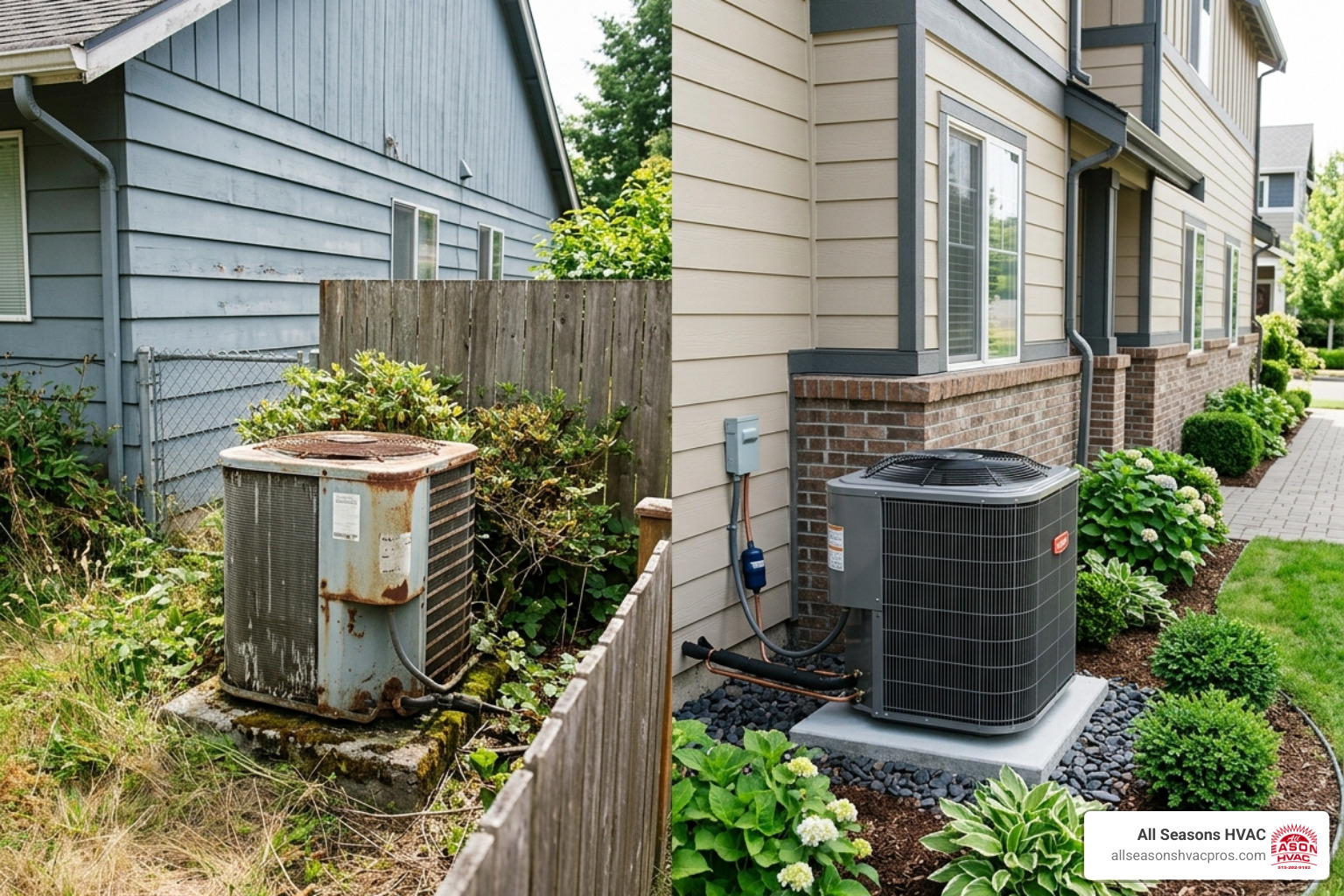
Absolutely! Homeowners can—and should—handle a few basic tasks. The most important is replacing your air filters every 1 to 3 months. You should also keep the area around your outdoor unit clear of debris like tall grass, leaves, or snow. A 18-to-24-inch clearance helps ensure proper airflow. You can also do a visual inspection of your condensate drain line to make sure it isn’t backed up. However, tasks involving refrigerant, high-voltage electricity, or internal components should always be left to a pro.
Conclusion
Understanding the heat pump maintenance vs ac maintenance differences is essential for any Central Iowa homeowner looking to protect their investment. While both systems provide excellent cooling, the year-round demands of a heat pump require a more dedicated maintenance schedule to stay efficient and reliable.
At All Seasons HVAC LLC, we are proud to serve the Greater Des Moines area, from Waukee to Indianola and everywhere in between. We know that HVAC systems are a major investment, which is why we offer budget-friendly financing plans to help make year-round home comfort affordable for everyone. Whether you need a spring tune-up for your AC or a comprehensive biannual plan for your heat pump, our team is here to help.
Don’t wait for the first heat wave of 2026 to find out your system isn’t up to the task. Contact us today to schedule your Professional HVAC services in Central Iowa and breathe easy knowing your home is in good hands.