Why Ice Is Forming on Your AC Unit — and What to Do About It
Ice forming on your ac unit causes and what to do is something every homeowner in Des Moines, Iowa should understand — especially when summer temperatures are climbing and your system suddenly stops keeping up.
Here is a quick answer:
Most common causes of ice on your AC unit:
- Dirty or clogged air filter restricting airflow
- Low refrigerant levels due to a leak
- Dirty evaporator coils blocking heat absorption
- Blocked or closed supply and return vents
- Blower fan failure reducing air circulation
- Running the AC when outdoor temps drop below 60°F
What to do immediately:
- Turn the AC off at the thermostat
- Switch the fan setting to “On” (not “Auto”) to circulate warm air
- Check and replace your air filter
- Clear any blocked vents or registers
- Wait 1–3 hours for the ice to thaw fully
- Call a licensed HVAC technician if the problem returns
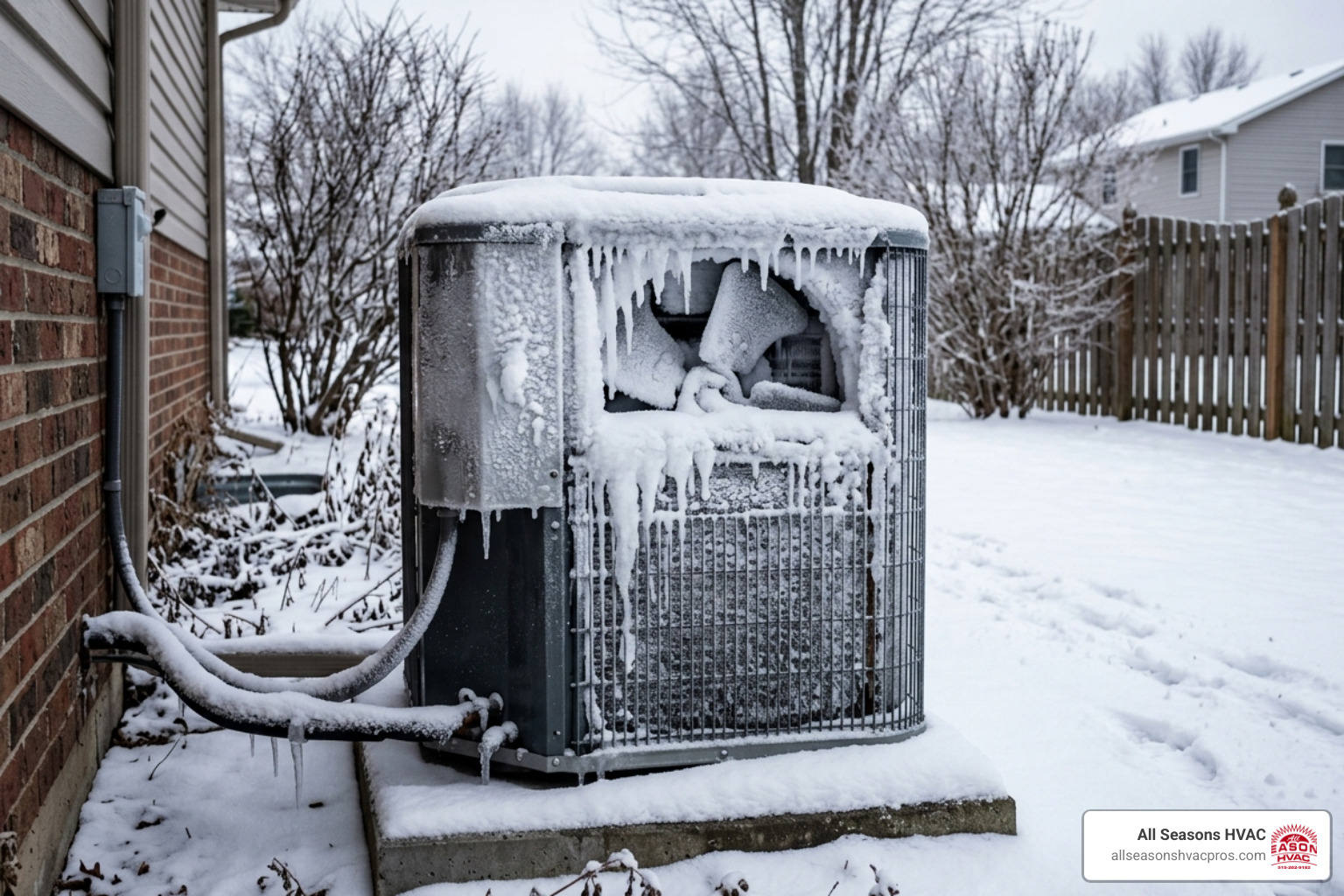
It might seem strange — even a little ironic — to find a thick layer of ice coating your air conditioner on a hot Iowa afternoon. But this is actually one of the most common AC problems homeowners face, and it is a warning sign that should never be ignored. Ice on your unit does not mean it is cooling extra hard. It means something is wrong inside the system.
At its core, your AC works by absorbing heat from your indoor air through a component called the evaporator coil. That coil needs a steady flow of warm air moving over it to function correctly. When that flow is disrupted — or when refrigerant levels drop too low — the coil temperature can fall well below freezing. Moisture from the air then condenses and freezes right onto the coil. Once that happens, the ice acts as an insulator, making the problem worse with every passing minute.
Left unaddressed, a frozen AC can spiral from a simple fix into a costly repair — or even a full system breakdown.
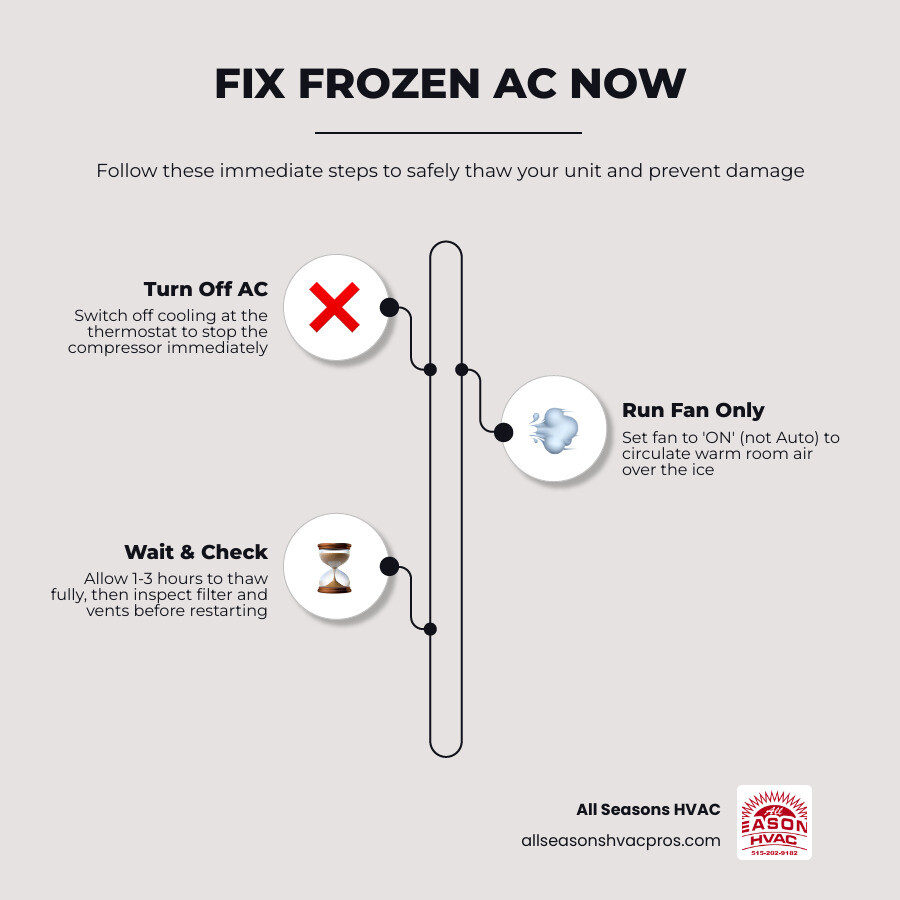
Why is ice forming on your ac unit causes and what to do immediately

The moment you spot frost on the copper lines outside or see a literal block of ice inside your air handler, your first instinct might be to lower the thermostat even further to “force” it to work. Do not do this. This is the fastest way to turn a small issue into a catastrophic equipment failure.
The most important thing to do regarding ice forming on your ac unit causes and what to do is to perform a complete system shutdown. Go to your thermostat and switch the cooling mode to “Off.” This stops the cooling cycle and prevents the compressor from struggling against a frozen block.
Next, switch your fan setting from “Auto” to “On.” This keeps the blower fan running independently of the cooling system. By doing this, you are pulling warm indoor air across those frozen coils, which significantly speeds up the thawing process. Think of it like defrosting a freezer; you need that ambient heat to do the work.
While you wait for the unit to thaw (which can take anywhere from 1 to 24 hours depending on the severity), you should also keep an eye out for water. As the ice melts, it can overwhelm your condensate drain pan. If you notice a mess, check out our guide on Why Is My Ac Leaking Water to ensure you don’t end up with water damage in your home. For a deeper dive into the mechanical side of things, we also have a detailed walkthrough on How To Fix A Frozen Ac Evaporator Coil.
The Serious Risks of Ignoring a Frozen Air Conditioner
It is tempting to let the ice melt and then just flip the AC back on, hoping for the best. However, ignoring the root cause of why your unit froze is a gamble with your wallet. When your evaporator coil is encased in ice, it can no longer absorb heat. This means your system runs constantly, trying to reach a temperature it can never achieve.
This leads to two major problems:
- Sky-high energy bills: Your system is working at maximum capacity while providing zero cooling.
- Compressor failure: The compressor is the “heart” of your AC. It is designed to pump gaseous refrigerant. If the coils are frozen, liquid refrigerant can travel back to the compressor — a phenomenon known as “slugging.” This can destroy the compressor entirely, which is often the most expensive repair in the HVAC world.
If you are hearing clunking or grinding while the unit is struggling, read up on Is Your Ac Making Strange Noises. In some cases, if the unit is older than 10 or 15 years and suffers a major freeze-up, it might be a sign that you are nearing the end of its life. You can learn more about these indicators in our guide on Signs You Need Ac Replacement.
Primary Culprits: Understanding the Root Causes
Understanding ice forming on your ac unit causes and what to do regarding airflow
Airflow is the lifeblood of your air conditioner. To prevent freezing, your system needs a constant supply of warm air from your home to keep the refrigerant inside the coils from dropping below 32°F. When that airflow is restricted, the temperature plummets, and ice begins to form.
The most common airflow obstructions include:
- Clogged Air Filters: This is the #1 cause of frozen ACs. A dirty filter acts like a wall, preventing air from reaching the coils.
- Closed or Blocked Vents: Many homeowners close vents in unused rooms to “save money,” but this actually increases static pressure and “suffocates” the system.
- Furniture and Drapes: Check to ensure that no couches, rugs, or heavy curtains are covering your return air grilles.
- Dirty Evaporator Coils: Dust and pet hair that bypass the filter can coat the coils, acting as insulation that prevents heat absorption.
- Blower Fan Issues: If the fan motor is failing or the blades are coated in grime, it won’t move enough air to keep the system warm.
If you suspect your home has poor circulation, our article on Solving Poor Ac Airflow Problems can help you troubleshoot the specific areas where your ducts might be failing you.
Identifying ice forming on your ac unit causes and what to do about refrigerant leaks
The second most common reason for ice formation is low refrigerant. This might seem counterintuitive — wouldn’t less cooling fluid mean less ice? Not exactly.
Air conditioners operate based on a specific pressure-to-temperature relationship. When refrigerant levels are low (usually due to a pinhole leak), the pressure inside the evaporator coil drops. Following the laws of physics (specifically the Joule-Thomson Effect), a drop in pressure leads to a drop in temperature. This causes the coil to get much colder than it was designed to be, often reaching 10°F to 20°F. At these temperatures, moisture in the air doesn’t just condense; it flash-freezes.
If your system is blowing lukewarm air or you hear a distinct hissing or bubbling sound, you likely have a leak. Check our checklist for Ac Refrigerant Leak Signs to see if your symptoms match. Refrigerant is a hazardous substance and a closed system; it never gets “used up.” If it is low, it must be repaired by a professional. Simply “topping it off” is just a temporary bandage. For more on this, see Why Your Ac Is Not Cooling Properly.
How to Prevent AC Freezing in the Future
Prevention is always more affordable than an emergency repair. In Central Iowa, where we deal with high humidity and heavy pollen seasons, your AC takes a beating.
Here is how you can keep your system ice-free:
- Change Your Filters: We recommend checking your filters every 30 days during the peak of summer. If you have pets or live in a dusty area like Grimes or Johnston, you might need to replace them more frequently.
- Keep Vents Open: Ensure at least 80% of your vents are open at all times to maintain proper system pressure.
- Clear the Outdoor Unit: Keep a 2-foot clearance around your outdoor condenser. Clear away grass clippings, leaves, and debris that can hinder heat release.
- Manage Humidity: High indoor humidity makes it easier for ice to form. If your home feels muggy, it might be putting extra strain on the coils.
Maintaining a clean system also helps prevent those “locker room” smells. See our Fixing Ac Odors Maintenance Tips for more advice on keeping your air fresh.
| Task | Homeowner (Monthly) | Professional (Annual) |
|---|---|---|
| Filter Replacement | Inspect and replace if dirty | Verify correct filter type/size |
| Vent Inspection | Ensure all registers are unblocked | Check ductwork for leaks |
| Drain Line | Check for standing water in pan | Flush and clear condensate drain |
| Coil Cleaning | Clear debris from outdoor unit | Deep-clean indoor evaporator coils |
| System Health | Monitor thermostat accuracy | Test refrigerant levels and pressures |
Frequently Asked Questions about ice forming on your ac unit causes and what to do
How long does it typically take for a frozen AC to thaw?
Depending on how much ice has built up, the thawing process usually takes between 1 to 3 hours. However, if you have a massive block of ice that has been growing for days, it could take up to 24 hours to melt completely. Running the fan on the “On” setting is the best way to speed this up safely. Do not try to restart the cooling mode until you are certain all ice is gone.
Can you run your AC while it’s frozen, and why not?
No. Running a frozen AC is one of the fastest ways to destroy your system. The ice acts as a barrier, preventing the system from cooling your home. More importantly, it can cause “liquid slugging” in your compressor. Since liquids cannot be compressed, this can lead to mechanical failure that requires a full system replacement.
Is it safe to chip away ice from the AC coils?
Absolutely not. The evaporator coils are made of thin copper or aluminum fins that are incredibly delicate. Using a screwdriver, ice pick, or even a plastic spatula to chip at the ice can easily puncture the refrigerant lines. A single puncture will cause all your refrigerant to leak out, leading to a much more expensive repair than a simple thaw. Let nature (and your blower fan) do the work.
Conclusion
Discovering ice forming on your ac unit causes and what to do is the first step toward protecting your home’s comfort and your financial investment. Whether it is a simple filter change or a complex refrigerant leak, addressing the issue early is key to avoiding a total system breakdown during a Des Moines heatwave.
At All Seasons HVAC LLC, we take pride in keeping our neighbors in West Des Moines, Ankeny, Waukee, and throughout Central Iowa cool and comfortable. We offer budget-friendly financing plans to ensure that unexpected AC issues don’t break the bank. If your unit is struggling, freezing up, or just not cooling like it used to, don’t wait for the ice to cause permanent damage.
For expert diagnostics and reliable repairs, contact us today or visit our Air Conditioning Services Des Moines IA page to schedule your professional inspection. We are here to provide the year-round comfort you deserve.