Why Ductless Mini Splits Are Changing How Des Moines Metro Homeowners Stay Comfortable
The ductless mini split benefits for the Des Moines metro homes market are hard to ignore — especially if you’ve ever dealt with a sweltering upstairs bedroom in July or a freezing sunroom addition in January. Des Moines weather is no joke. Winters push well below freezing, summers get hot and sticky, and older homes across the metro weren’t always built to handle modern comfort demands.
Many homes in Central Iowa don’t have ductwork at all. Others have rooms that the central system simply can’t reach well — finished basements, converted garages, second-floor bedrooms, or new additions. For those homeowners, a ductless mini-split system offers a smarter path to year-round comfort without tearing walls apart to run new ducts.
Here’s a quick look at the top benefits Des Moines homeowners get from ductless mini-splits:
- Zoned comfort — control temperatures room by room, independently
- No ductwork needed — ideal for older homes, additions, and spaces central HVAC can’t reach
- Energy efficiency — no duct losses mean less wasted energy every month
- Heating and cooling in one system — works year-round, even in Iowa winters
- Quiet operation — much quieter than window units or forced-air systems
- Long lifespan — ductless systems can last around 20 years with proper care
- Improved indoor air quality — no dirty ducts circulating dust and allergens
- Flexible expansion — one outdoor unit can power up to five indoor air handlers
- WiFi-enabled controls — adjust temps from your phone, from anywhere
Whether you’re dealing with hot upstairs rooms, a space that never got ductwork, or simply want more control over your energy use, ductless mini-splits are worth a serious look. This guide walks through everything Des Moines homeowners need to know before making a decision.
What a Ductless Mini-Split Is and Why It Fits Des Moines Homes
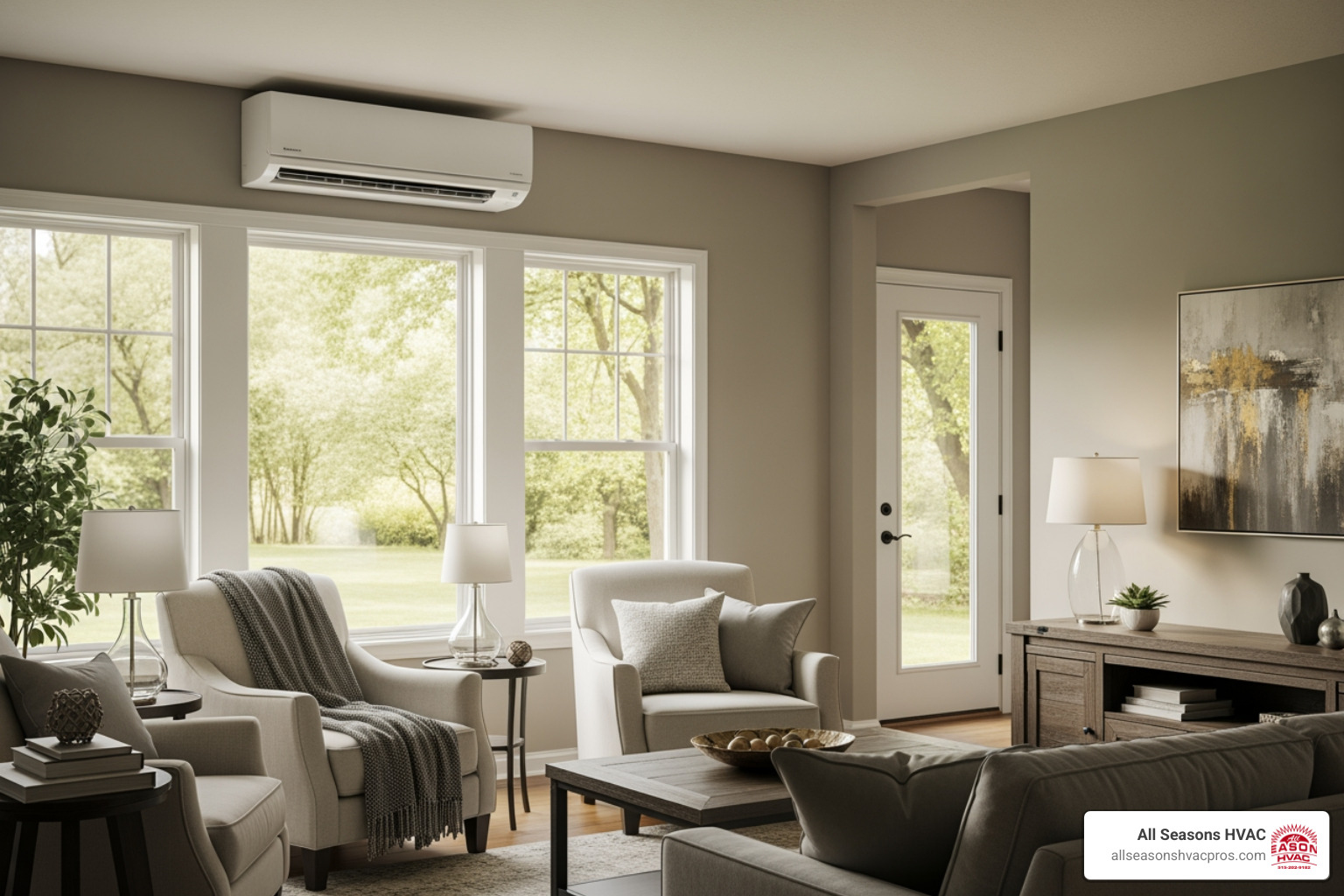
If you are new to HVAC, the term “mini-split” might sound like a gymnastics move, but it is actually one of the most versatile heating and cooling solutions available today. Unlike traditional systems that rely on a network of metal ducts hidden in your attic or crawlspace, these systems deliver air directly into the room you are standing in.
What Is a Ductless Mini-Split System and How Does It Work?
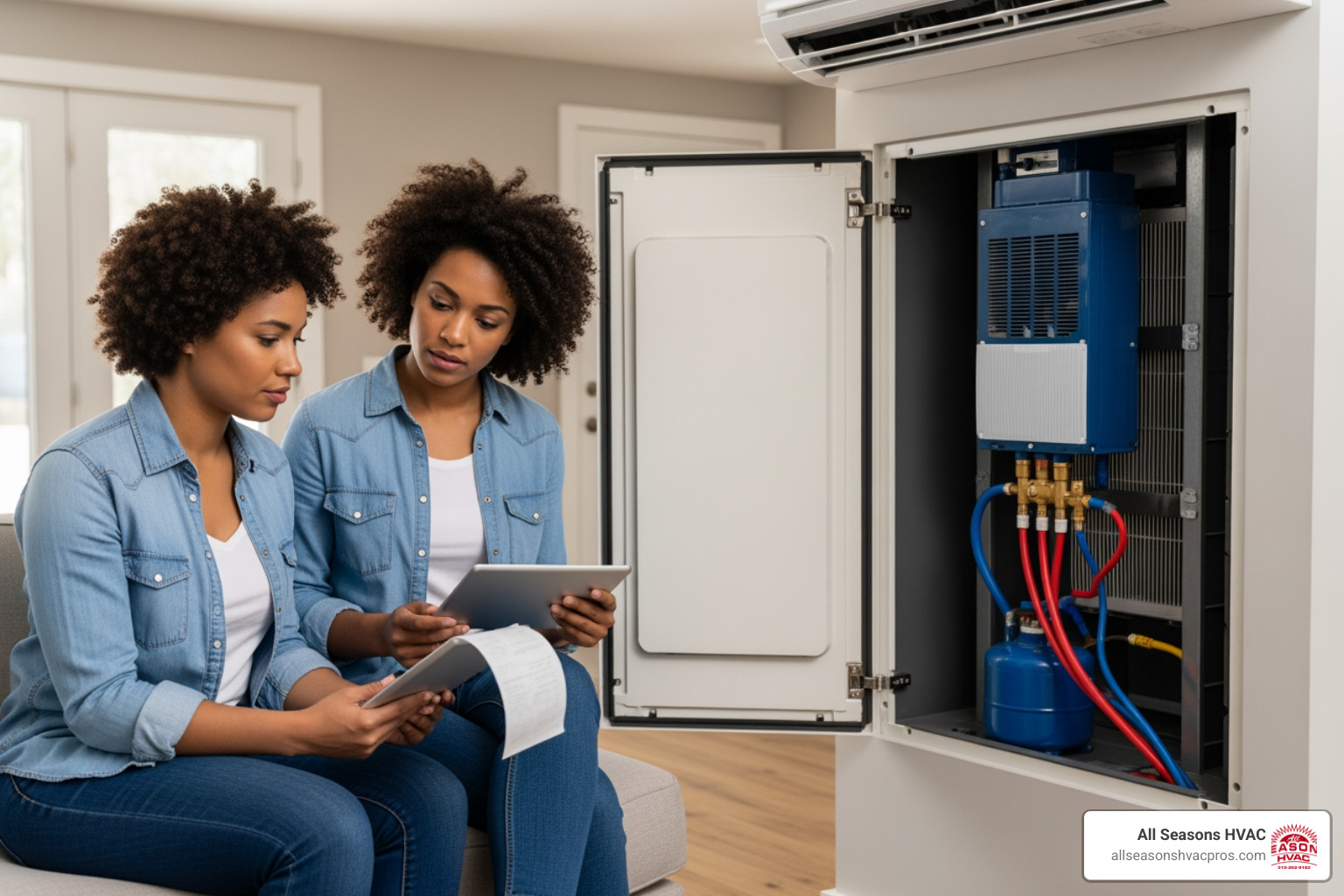
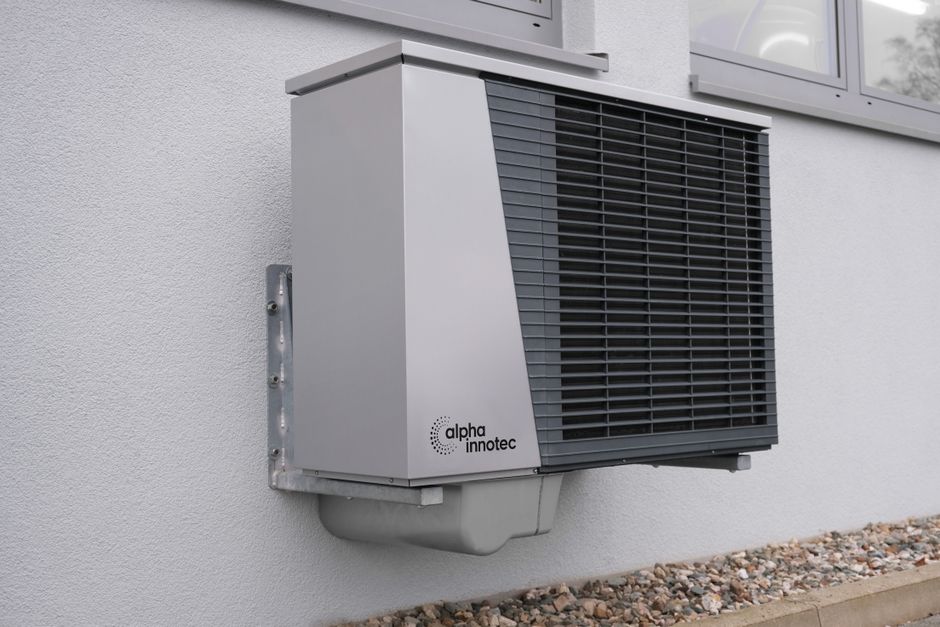
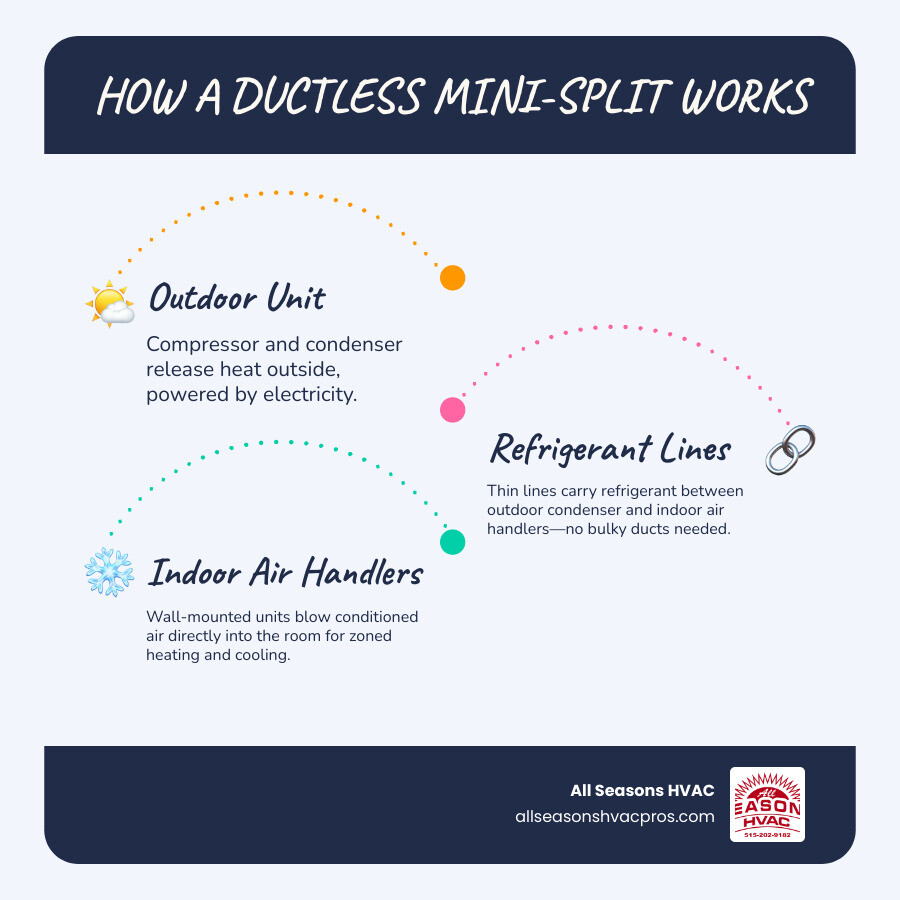
At its core, a ductless mini-split consists of two main parts: an outdoor compressor (or condenser) and one or more indoor air handlers. These two components are connected by a small bundle of cables, including a power cable, refrigerant tubing, and a suction line.
One of the biggest ductless mini split benefits for the Des Moines metro homes is the use of inverter technology. While a traditional furnace or AC is either “all on” or “all off,” a mini-split can vary its speed. Think of it like a dimmer switch for your comfort. It runs at the exact speed needed to maintain the temperature, which saves a massive amount of energy and provides whisper-quiet operation. Because there are no ducts, you avoid the energy loss that typically occurs when air travels through leaky, uninsulated pipes in a hot attic or cold basement.
Why Ductless Mini-Splits Make Sense in Central Iowa Houses
In the Des Moines metro area, we have a diverse range of housing stock. From the historic charm of Sherman Hill to the sprawling new builds in Waukee and Ankeny, ductless systems solve unique problems for every age of home.
- Older Homes: Many vintage Des Moines homes use boiler systems with radiators. While cozy in the winter, these homes lack the ductwork for central AC. Installing a mini-split is much less invasive and expensive than retrofitting a 100-year-old home with bulky ducts.
- Finished Basements: If you’ve finished your basement in Urbandale or Johnston, you know that central HVAC often struggles to keep it from feeling like a damp cave. A mini-split provides targeted heat and dehumidification.
- Sunrooms and Garages: Want to use your sunroom in February or keep your garage workshop cool in August? A mini-split is the “secret weapon” for these spaces.
- Second Floors: We often hear from homeowners in West Des Moines who complain that their second floor is 10 degrees hotter than their first floor. A mini-split can bridge that gap perfectly.
Single-Zone vs. Multi-Zone Setups for Local Homes
Flexibility is the name of the game here. You can choose a single-zone system, which features one indoor unit connected to one outdoor unit—perfect for a new home office or a master suite.
However, many families in the metro opt for multi-zone setups. A single outdoor compressor can power up to five separate indoor units. Each of these units has its own independent thermostat. This means you can keep the nursery at a steady 72 degrees while the guest room stays at 65 degrees to save energy. You can even start with one or two units and expand the system later as your budget or needs change.
Ductless Mini Split Benefits for the Des Moines Metro Homes
When we talk to neighbors about upgrading their HVAC, the conversation usually turns to efficiency and control. The ductless mini split benefits for the Des Moines metro homes extend far beyond just “getting cold air.”
The Biggest Ductless Mini Split Benefits for the Des Moines Metro Homes
The most immediate benefit is the reduction in energy waste. Traditional HVAC systems lose up to 30% of their energy through the ductwork itself. By eliminating the middleman (the ducts), mini-splits ensure that 100% of the energy you pay for is delivered directly into your living space.
Furthermore, these systems are built to last. While a standard central AC might start showing its age after 12 to 15 years, a well-maintained ductless system has an estimated lifespan of about 20 years. When you factor in the high Energy Star ratings and the ability to control the system via WiFi from your smartphone, it is clear why so many residents in Norwalk and Indianola are making the switch.
How Zoned Heating and Cooling Improves Daily Comfort
Think about your daily routine. Do you spend all day in every room of your house? Probably not. Traditional central systems treat your home like one giant room, heating and cooling the empty guest bedroom just as much as the kitchen where you’re cooking dinner.
Zoned comfort allows you to stop paying for comfort in rooms you aren’t using. It also solves the “thermostat wars” in many households. If one family member likes it chilly and another prefers it warm, everyone can be happy in their own zone. This is particularly helpful for home offices, where electronics can generate extra heat, or for nurseries where consistent temperatures are a safety priority.
Indoor Air Quality and Humidity Benefits Homeowners Notice
Iowa summers are notoriously humid. One of the best ductless mini split benefits for the Des Moines metro homes is the superior dehumidification these units provide. Because they run at variable speeds, they spend more time “polishing” the air, removing moisture more effectively than a standard AC that cycles on and off quickly.
Additionally, since there are no ducts, there is no place for dust, pet dander, or allergens to hide and circulate. Each indoor unit has its own multi-stage filtration system. Cleaning them is as simple as popping open the front panel and washing the filters in your sink every few weeks. For families in Des Moines dealing with seasonal allergies, this can be a total game-changer.
How Ductless Systems Handle Des Moines Winters and Summers
A common question we get is: “Can a little wall unit really handle an Iowa winter?” In the past, the answer might have been “maybe.” But in May 2026, the technology has advanced significantly.
Can a Mini-Split Really Heat Through an Iowa Winter?
Yes! Modern “cold-climate” heat pumps are designed specifically for regions like ours. While standard heat pumps might struggle when the mercury drops, these specialized models can maintain high efficiency even when temperatures hit sub-freezing levels.
In fact, some ductless systems have been proven to keep homes comfortable even during extreme weather events with windchills reaching -30 degrees. While many Des Moines homeowners keep their existing gas furnace as a “backup” for those few truly brutal nights, a mini-split can handle the bulk of the heating during the “shoulder seasons” (October, November, March, and April) much more efficiently than a furnace.
Cooling Performance During Humid Des Moines Summers
When the humidity hits 90% in July, you need more than just cold air; you need dry air. Ductless systems excel here. Because they are sized specifically for the room they are in, they don’t “short cycle” (turning on and off rapidly). This allows them to steadily pull moisture out of the air, making a 75-degree room feel much cooler and more comfortable than it would with a traditional unit.
Best Home Types and Rooms for Ductless in the Metro
We see the best results for ductless installations in:
- Attic Bedrooms: These are notoriously difficult to cool because heat rises and ducts are often undersized.
- Basements: Great for adding heat and removing that “basement smell” via dehumidification.
- Workshops and Garages: For the DIY enthusiast who wants to work year-round.
- Aging in Place: Perfect for homeowners who want to “downsize” their living space to just the first floor without paying to heat the whole house.
For more tailored advice on your specific neighborhood, check out our Mini Split Air Conditioner Services in Des Moines, IA.
Ductless vs. Central HVAC: Pros, Trade-Offs, and Efficiency
Is ductless always better? Not necessarily. It depends on your home’s layout and your specific goals.
Where Ductless Beats Traditional Forced Air
Ductless wins hands-down when it comes to retrofits. If you have to cut into drywall, move plumbing, and sacrifice closet space just to run ducts, the cost and headache of central HVAC skyrocket. Traditional zone systems can cost up to $30,000 to install, making ductless mini-splits a significantly lower-cost alternative for multi-room comfort.
When Central HVAC May Still Be the Better Fit
If your home already has a well-designed duct system in good condition, a high-efficiency central air replacement might be the more straightforward choice. Some homeowners also prefer the “invisible” look of central HVAC vents over the wall-mounted units of a mini-split (though ceiling-cassette and floor-mounted models are available to keep things sleek).
Efficiency, Savings, and Longevity at a Glance
| Feature | Ductless Mini-Split | Central HVAC |
|---|---|---|
| Lifespan | Approx. 20 years | 12–15 years |
| Zoning | Built-in (Room by Room) | Requires expensive dampers/extra units |
| Installation | Non-invasive (Small wall hole) | Invasive (Requires ductwork) |
| Energy Loss | Near 0% | Up to 30% via ducts |
| Noise Level | Extremely Quiet | Moderate (Fan/Duct noise) |
Installation, Maintenance, and Local Service Planning
We cannot stress this enough: professional installation is vital. While you might see “DIY” kits online, they often lack the specialized tools and refrigerant handling required to ensure the system doesn’t leak or fail prematurely.
Why Professional Installation Matters for Performance and Warranty
A professional technician from All Seasons HVAC will perform a “load calculation” to ensure your unit is sized perfectly for the room. Too small, and it won’t keep up; too large, and it will cycle too often, wasting energy. We also handle the delicate refrigerant line connections and electrical work, ensuring your manufacturer’s warranty remains valid.
What the Installation Process Typically Involves
The process is surprisingly fast. We start with a home evaluation to plan the zones. On installation day, we mount the indoor units, drill a small three-inch hole for the conduit, and set the outdoor compressor on a stable pad. Most installations can be completed in a single day. If you’re ready to get started, you can learn more about Mini Split Installation in Des Moines, IA.
Maintenance Habits That Help a Mini-Split Last
To get that 20-year lifespan, you’ll want to follow a few simple steps:
- Clean the filters: Do this every 2–4 weeks depending on pet hair and dust levels.
- Keep the outdoor unit clear: Ensure snow, leaves, and grass clippings aren’t blocking the airflow.
- Annual Tune-ups: Have us come out once a year to check refrigerant levels and clean the coils.
Rebates, Incentives, and Financing Options Des Moines Homeowners Should Ask About
Upgrading your home’s comfort shouldn’t break the bank. As a MidAmerican EnergyAdvantage Partner, we can help you navigate local rebates for high-efficiency upgrades. Additionally, at All Seasons HVAC, we offer budget-friendly financing plans, including options like 5-year 0% deferred interest for qualified homeowners. This makes the transition to high-efficiency comfort affordable from day one.
Frequently Asked Questions About Ductless Mini Splits in Des Moines
Do Mini-Splits Have to Be Installed on an Outside Wall?
Not necessarily. While it is the most common and easiest path for the refrigerant lines, we can route the lines through attics or crawlspaces to reach interior walls. There are also ceiling-mounted “cassette” options for a more discreet look.
Where Should You Not Install a Ductless Mini-Split?
Avoid placing the indoor unit near heat sources (like a stove), in areas with blocked airflow (behind a curtain), or in spots with extremely high humidity (directly over a bathtub). For the outdoor unit, we avoid areas prone to heavy snow drifts or direct, punishing sunlight if possible.
Is a Ductless Mini-Split Right for My Des Moines-Area Home?
If you have a room that is never the right temperature, an older home without ducts, or you’re tired of high utility bills from an inefficient central system, the answer is likely yes. It is the most flexible way to solve comfort problems in the metro.
Conclusion: Is a Ductless Mini-Split the Right Upgrade for Your Home?
The ductless mini split benefits for the Des Moines metro homes are clear: they offer unmatched efficiency, personalized comfort, and a way to bring modern HVAC to any space without the mess of ductwork. Whether you are in West Des Moines, Urbandale, or Indianola, these systems are a proven solution for our unique Iowa climate.
At All Seasons HVAC, we pride ourselves on being the local experts who understand the specific needs of Central Iowa families. We’re here to help you find the right setup for your home and your budget.
Ready to find your secret weapon for home comfort? Contact us at All Seasons HVAC today for a consultation and let’s make every room in your house your favorite room.